


 Eng
Eng 
 русский
 Home / News / Industry News / Essential ASME Standards for Selecting a metal gasket ring in High-Pressure Piping Systems
 Essential ASME Standards for Selecting a metal gasket ring in High-Pressure Piping Systems
 2026.01.16
 Industry News
Article Directory
- 1 The Regulatory Framework of Industrial Sealing: ASME B16.20 and Beyond
- 2 Geometric Configurations and Sealing Mechanics
- 3 Material Science for Extreme Environments
- 4 High-Pressure Applications and Regulatory Compliance
- 5 Global Sourcing and Manufacturing Excellence
- 6 Conclusion: The Jintai Sealing Technology Commitment
- 7 Frequently Asked Questions (FAQ)
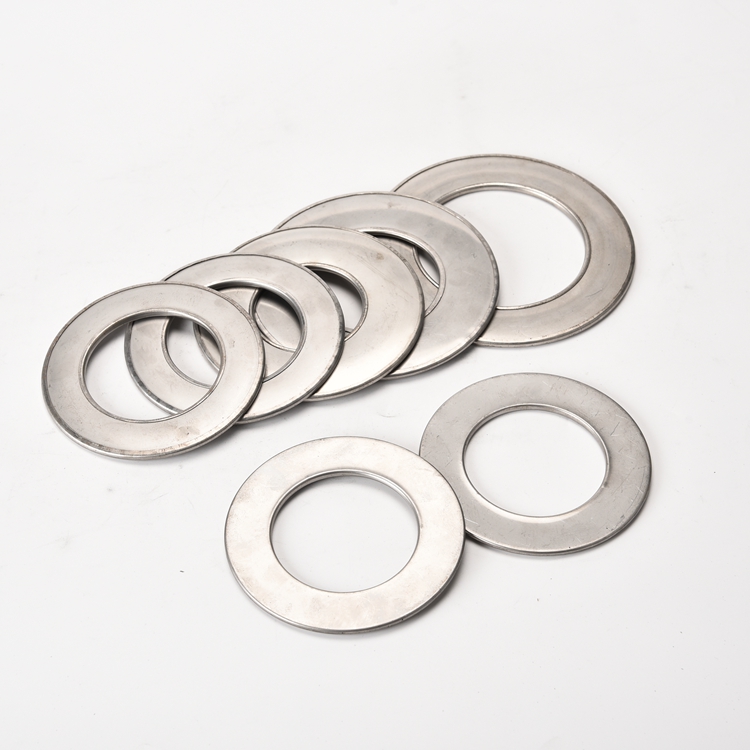
In the complex architecture of high-pressure piping, the integrity of a flanged joint is fundamentally dependent on the mechanical performance of the metal gasket ring. For engineers in the petrochemical, power, and shipping industries, selecting a sealing component is not merely a purchasing decision but a critical compliance task governed by rigorous international standards. Jiangsu Jintai Sealing Technology Co., Ltd., established in 2004, has dedicated decades to the scientific manufacture of these components, ensuring that our high-end brand, Nofstein, meets the evolving needs of global fluid handling systems.
The Regulatory Framework of Industrial Sealing: ASME B16.20 and Beyond
The primary standard governing the design and manufacture of metallic gaskets for pipe flanges is ASME B16.20. This standard covers Ring Joint Gaskets (RTJ), spiral wound gaskets, and jacketed gaskets. When dealing with high-pressure environments, the metal gasket ring must be manufactured with precise dimensional tolerances to ensure that the initial line contact between the gasket and the flange groove yields into a liquid-tight seal. According to the 2024 revisions in global pressure vessel codes, the emphasis on fugitive emission reduction has led to stricter hardness requirements for metallic sealing elements.
Source: ASME B16.20 Metallic Gaskets for Pipe Flanges
Understanding the Fundamental metal gasket ring pressure rating chart
A metal gasket ring pressure rating chart is an indispensable tool for engineers. It correlates the flange class (ranging from Class 150 to Class 2500) with the permissible working pressure at specific temperatures. Selecting a gasket that does not align with the flange's pressure rating can lead to catastrophic joint failure. While standard gaskets are suitable for low-pressure applications, high-pressure systems require RTJ (Ring Type Joint) configurations that utilize the "wedge effect" to increase sealing pressure as internal fluid pressure rises.
Geometric Configurations and Sealing Mechanics
The geometry of the gasket determines its ability to deform and seal within the flange groove. Modern sealing technology distinguishes between several profiles based on the groove design and the required bolt load.
Technical Analysis: oval vs octagonal metal gasket ring
The debate between an oval vs octagonal metal gasket ring centers on the contact surface area and reusability. An oval cross-section provides a lower initial sealing force requirement due to its curved contact point, whereas the octagonal version provides a higher sealing efficiency because of its flat contact surfaces, which align more precisely with the modern trapezoidal grooves of ASME B16.5 flanges. While oval rings were historically more common, octagonal rings are now preferred for their superior vibration resistance in high-pressure cycles.
| Feature | Oval Metal Gasket Ring | Octagonal Metal Gasket Ring |
| Contact Type | Line contact; higher surface stress. | Surface contact; more uniform load distribution. |
| Groove Compatibility | Compatible with both round and flat bottom grooves. | Primarily designed for modern flat-bottom grooves. |
| Sealing Efficiency | Moderate; susceptible to vibration. | High; superior performance in fluctuating pressures. |
Material Science for Extreme Environments
The chemical compatibility and thermal stability of a metal gasket ring are as vital as its geometry. Sealing materials must be softer than the flange material to ensure the gasket deforms rather than the flange face.
Engineering high temperature metal gasket ring materials
In thermal power and steel manufacturing, high temperature metal gasket ring materials such as Inconel 625, 316L Stainless Steel, and Soft Iron are used based on the operating environment. Recent market data from the International Energy Agency (IEA) suggests that high-efficiency power plants are increasing operating temperatures to optimize carbon output, necessitating gaskets that can withstand continuous exposure to temperatures exceeding 600°C without oxidizing or losing elastic recovery.
Source: IEA Clean Energy Technology Innovation Report 2024
High-Pressure Applications and Regulatory Compliance
In the upstream oil and gas sector, the standards for wellhead and christmas tree equipment are significantly more stringent than standard piping codes.
Integrating API 6A metal gasket ring specifications
For high-pressure wellhead applications, engineers must adhere to API 6A metal gasket ring specifications. These "R," "RX," and "BX" series gaskets are designed for pressures up to 20,000 psi. Specifically, the BX type is a pressure-energized gasket, meaning it utilizes internal pressure to enhance the seal's integrity, a requirement for subsea and high-pressure drilling environments where failure is not an option.
Global Sourcing and Manufacturing Excellence
As industrial demand scales, the importance of a reliable supply chain cannot be overstated. Technical buyers must vet manufacturers based on their quality management manuals and certification history.
Why Partner with wholesale metal gasket ring suppliers in China
Modern wholesale metal gasket ring suppliers in China, such as Jiangsu Jintai Sealing Technology Co., Ltd., have evolved from simple manufacturers into comprehensive sealing technology enterprises. With our 2012 Sealing Technology Industrial Park project, we have integrated advanced materials and manufacturing processes that comply with CCS classification society standards. Our vigorous foreign trade group ensures that high-end sealing solutions like Nofstein are accessible to major projects in Eastern Europe, Southeast Asia, and Africa, providing a cost-effective yet technically superior alternative to traditional Western brands.
Conclusion: The Jintai Sealing Technology Commitment
Selecting the right metal gasket ring is a multi-faceted process involving ASME standards, material science, and geometric precision. By adhering to the latest industry standards and leveraging decades of manufacture experience, Jiangsu Jintai Sealing Technology provides the reliability required for the world's most demanding industries. We welcome global partners to explore our industrial park and collaborate on large-scale major projects.
Frequently Asked Questions (FAQ)
- What is the primary difference in an oval vs octagonal metal gasket ring for reusability? While octagonal rings provide a better seal, neither should ideally be reused in high-pressure systems as the metal undergoes work-hardening during the initial torque.
- Where can I find a reliable metal gasket ring pressure rating chart? Standard charts are found in ASME B16.20 and B16.5; however, Jintai Sealing provides customized charts for specific Nofstein materials.
- Are API 6A metal gasket ring specifications interchangeable with ASME B16.20? No. API 6A gaskets are specifically for wellhead equipment and have different dimensional and pressure requirements than standard B16.20 gaskets.
- What are the most common high temperature metal gasket ring materials for the chemical industry? 316L and 347 Stainless Steel are standard, but for extreme temperatures, exotic alloys like Monel or Inconel are required to prevent stress corrosion cracking.
- Why should I choose wholesale metal gasket ring suppliers in China for major projects? Companies like Jintai Sealing offer a complete ecosystem—from R&D and manufacturing to global logistics—ensuring CCS classification quality and environmental protection compliance.

 Home
Home +86 152 4020 4398
 zdjt004@jsjtmf.vip
 No.2 Xingyuan East Road, Yuanzhu Town Industrial Park, Taixing City, Jiangsu Province, China
Copyright © 2024. Jiangsu Jintai Sealing Technology Co., Ltd. All rights reserved. Custom Sealing Gaskets, Sealing Packing, Rubber Products
