


 Eng
Eng 
 русский
 Home / News / Industry News / Precision Selection and Compliance for Carbon Gland Packing: Cross-Section and Certification Guide
 Precision Selection and Compliance for Carbon Gland Packing: Cross-Section and Certification Guide
 2026.01.08
 Industry News
Article Directory
- 1 How to Correctly Calculate Cross-Section Dimensions and Length
- 2 Material Performance and Industry Certifications
- 3 Installation Best Practices for Gland Sealing Systems
- 4 Frequently Asked Questions (FAQ)
- 4.1 1. How do I calculate the total weight of packing needed for a large valve?
- 4.2 2. Can I use carbon packing in potable water systems?
- 4.3 3. Why is my carbon packing causing shaft scoring?
- 4.4 4. Does your product meet European export standards?
- 4.5 5. How does carbon fiber compare to asbestos for high-temperature valves?
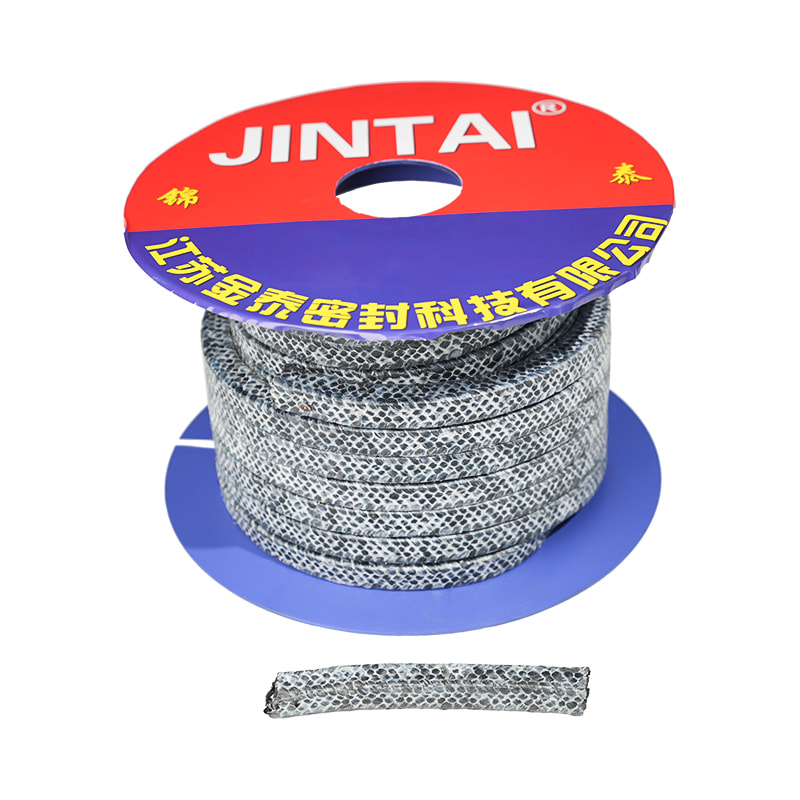
In the high-stakes environment of fluid handling and industrial processing, the integrity of a sealing system is paramount. Carbon gland packing remains a cornerstone for high-performance sealing in pumps and valves, particularly when dealing with aggressive chemicals and high temperatures. Jiangsu Jintai Sealing Technology Co., Ltd., founded in 2004, has spent decades perfecting the manufacture of these critical components. Through our high-end brand, Nofstein, we integrate advanced materials and manufacturing processes to provide specialized PTFE graphite packing for chemical pumps and other industrial solutions. Our commitment to quality is backed by CCS classification society identification and rigorous testing by national nonmetal and coal science institutions.
How to Correctly Calculate Cross-Section Dimensions and Length
Selecting the correct size for carbon gland packing is an engineering task that directly affects the leakage rate and friction torque of the equipment. A mismatch in dimensions leads to premature failure; if the packing is too small, it will not seal effectively, and if too large, it can cause excessive heat and shaft damage. The high temperature carbon fiber valve packing must be calculated based on the precise dimensions of the stuffing box. According to the latest 2024 standards from the Fluid Sealing Association (FSA), the cross-section (S) is determined by the formula: , where D is the stuffing box bore diameter and d is the stem or shaft diameter. For a low friction carbon packing for centrifugal pumps, achieving a perfect fit ensures thermal dissipation and longer MTBF (Mean Time Between Failure).
Source: Fluid Sealing Association - Technical Guidelines for Compression Packing 2024
Measurement Strategy: Cross-Section vs. Length
While the cross-section ensures the radial seal, the length of each ring determines the axial compression efficiency. Unlike fiber-only packings, PTFE graphite packing for chemical pumps requires specific attention to volume loss during initial compression.
| Parameter | Calculation Logic | Consequence of Deviation |
| Cross-Section (S) | (Stuffing Box ID - Shaft OD) / 2 | Undersize: Leakage; Oversize: Excessive friction/Shaft scoring |
| Ring Length (L) | (Shaft Diameter + S) x 3.14159 | Short: Gap at joint; Long: Overlap and uneven compression |
| Number of Rings | Stuffing Box Depth / S | Too few: Insufficient sealing pressure; Too many: No room for gland adjustment |
Material Performance and Industry Certifications
For B2B procurement in the pharmaceutical, food, and chemical industries, technical performance must be paired with safety compliance. Carbon gland packing infused with PTFE or graphite must adhere to strict environmental and health regulations. Our Nofstein brand products are developed to be FDA compliant PTFE graphite packing, ensuring they are safe for use in processes involving consumables. Furthermore, 2025 data from the European Chemicals Agency (ECHA) indicates that over 95% of high-end industrial seals must now be REACH certified carbon packing for valves to minimize the presence of SVHC (Substances of Very High Concern). At Jiangsu Jintai, our products have passed the CiT test for environmental protection, reflecting our commitment to sustainable and safe sealing technology.
Source: European Chemicals Agency - REACH Compliance and SVHC Database 2025
Comparison: Standard vs. Certified Packing Performance
Standard industrial packings focus purely on mechanical sealing, whereas certified high-end packings provide a guarantee of chemical purity and environmental safety for specialized industries.
| Certification Type | Primary Focus | Typical Application Sector |
| FDA (CFR 177.1550) | Food contact safety; Non-toxicity | Food Processing & Pharmaceutical |
| REACH | Chemical safety; Substance control | General Chemical & Global Export |
| CCS / CCS Quality System | Marine and industrial reliability | Shipping, Power, and Steel Industries |
Installation Best Practices for Gland Sealing Systems
Even the best high temperature carbon fiber valve packing will fail if installed incorrectly. Proper installation involves staggering the joints of each ring to create a tortuous path for the fluid. For a low friction carbon packing for centrifugal pumps, the "break-in" period is critical. Initial leakage should be allowed to cool the packing before gradually tightening the gland nuts. This process ensures the PTFE and graphite particles are distributed evenly, creating a low-coefficient surface that protects the shaft from wear.
- Joint Staggering: Each ring joint should be staggered at 90 or 120 degrees relative to the previous ring.
- Cleanliness: The stuffing box must be entirely free of old packing residue and scoring.
- Lubrication: Use an compatible lubricant to facilitate the initial seating of the carbon gland packing.
- Gradual Adjustment: Avoid over-tightening during the first 15-30 minutes of operation to prevent overheating.
Frequently Asked Questions (FAQ)
1. How do I calculate the total weight of packing needed for a large valve?
Total weight is generally estimated based on the volume of the stuffing box () multiplied by the density of the specific carbon gland packing material, plus a 10% safety margin for cutting loss.
2. Can I use carbon packing in potable water systems?
Yes, but you must ensure it is an FDA compliant PTFE graphite packing. Standard industrial carbon packing may contain binders not suitable for human consumption.
3. Why is my carbon packing causing shaft scoring?
This is usually due to selecting an oversized cross-section or over-tightening the gland. Low friction carbon packing for centrifugal pumps is designed to avoid this by incorporating graphite and PTFE lubricants that act as a sacrificial layer.
4. Does your product meet European export standards?
Absolutely. As a REACH certified carbon packing for valves manufacturer, Jiangsu Jintai ensures all chemical substances used in Nofstein products are registered and safe for the European market.
5. How does carbon fiber compare to asbestos for high-temperature valves?
High temperature carbon fiber valve packing is a superior, environment-friendly alternative to asbestos. It offers higher thermal conductivity and better chemical resistance without the health risks associated with mineral fibers.

 Home
Home +86 152 4020 4398
 zdjt004@jsjtmf.vip
 No.2 Xingyuan East Road, Yuanzhu Town Industrial Park, Taixing City, Jiangsu Province, China
Copyright © 2024. Jiangsu Jintai Sealing Technology Co., Ltd. All rights reserved. Custom Sealing Gaskets, Sealing Packing, Rubber Products
