


 Eng
Eng 
 русский
 Home / News / Industry News / How Can Using a Corrugated Graphite Gasket Solve Fugitive Emission Issues in Aging Flange Systems?
 How Can Using a Corrugated Graphite Gasket Solve Fugitive Emission Issues in Aging Flange Systems?
 2026.01.01
 Industry News
Article Directory
- 1 Addressing Flange Irregularities in Aging Infrastructure
- 2 High-Temperature and Chemical Resilience
- 3 Optimizing Sealing Performance with Nofstein Technology
- 4 Frequently Asked Questions (FAQ)
- 4.1 1. Why is a corrugated graphite gasket better for fugitive emissions than a spiral wound gasket?
- 4.2 2. Can a high temperature corrugated graphite gasket for steam handle thermal cycling?
- 4.3 3. Is a stainless steel core corrugated graphite gasket resistant to chemicals?
- 4.4 4. Does a low bolt load corrugated graphite seal compromise the blow-out resistance?
- 4.5 5. Can I order a custom size corrugated graphite gasket for shipping applications?
Fugitive emissions in industrial aging flange systems present a dual challenge: environmental non-compliance and significant product loss. As flanges age, surface irregularities, warping, and pitting become prevalent, making standard sealing methods insufficient. The corrugated graphite gasket has emerged as a premier engineering solution for these compromised joints. Jiangsu Jintai Sealing Technology Co., Ltd., founded in 2004, has spent decades researching high-end sealing solutions. Through our premium brand, Nofstein, we provide advanced corrugated graphite gasket technology designed to restore the integrity of aging infrastructure across the shipping, chemical, and power industries.
Addressing Flange Irregularities in Aging Infrastructure
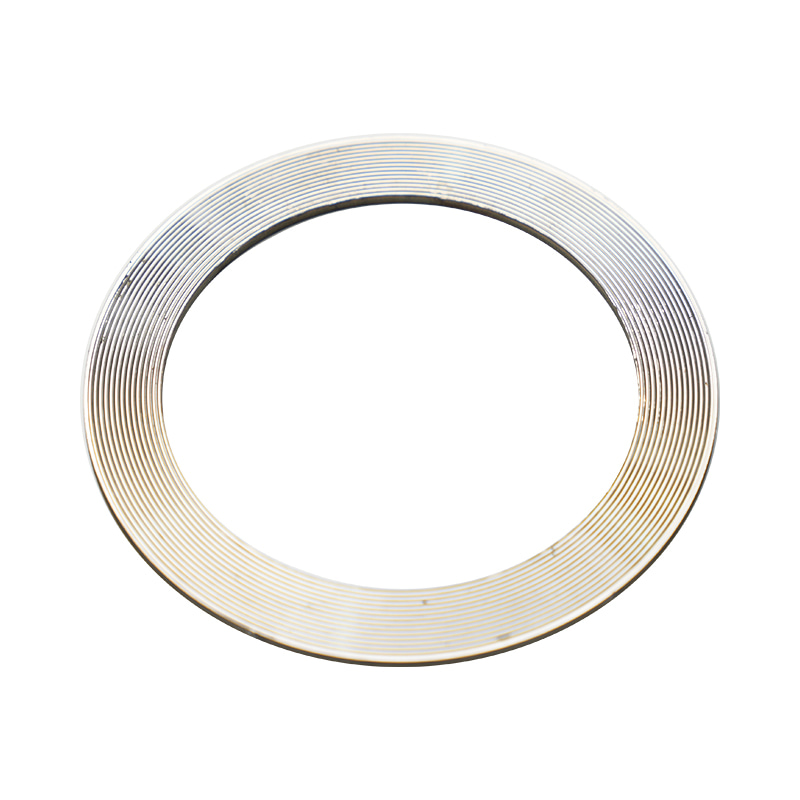
Aging flange systems often suffer from "flange rotation" or surface scarring that prevents a flat gasket from creating a gas-tight seal. A corrugated graphite gasket solves this by utilizing a metallic core with concentric corrugations. These ridges create high-seated stress points that allow the flexible graphite layer to flow into microscopic voids and pits on the flange face. According to the 2024-2025 Valve and Sealing Technology Outlook by the Fluid Sealing Association (FSA), the implementation of "low-emission" (Low-E) certified gaskets is becoming mandatory as EPA and international regulations tighten regarding volatile organic compounds (VOCs). The corrugation design specifically minimizes the surface area required for an initial seal, ensuring performance even under lower bolt loads common in older systems.
Source: Fluid Sealing Association - Industrial Emission Control Standards 2025
Comparison: Standard Flat Gaskets vs. Corrugated Graphite Gaskets
While standard flat gaskets require immense bolt load to achieve a seal on worn surfaces, the corrugated graphite gasket uses its geometric profile to multiply seating stress. This allows for a low bolt load corrugated graphite seal that prevents further damage to fragile or aging flange threads while still maintaining a leak-free environment.
| Performance Factor | Standard Flat Graphite Gasket | Nofstein Corrugated Graphite Gasket |
| Sealing on Pitted Surfaces | Poor; requires high compression to fill voids. | Excellent; ridges concentrate stress to fill pits. |
| Required Bolt Load | High; risks over-stressing aging bolts. | Moderate to Low; preserves fastener integrity. |
| Fugitive Emission Control | Moderate; susceptible to bypass leakage. | Superior; achieves Tightness Class L0.01. |
| Recovery (Elasticity) | Low; becomes permanent set. | High; corrugations act as a spring. |
High-Temperature and Chemical Resilience
Aging systems in the chemical and power sectors often operate under fluctuating thermal cycles, which can cause gaskets to lose their seal. A high temperature corrugated graphite gasket for steam systems is essential because the graphite maintains its chemical inertness up to 450°C in oxidizing atmospheres and much higher in non-oxidizing environments. Jiangsu Jintai Sealing Technology Co., Ltd. ensures that our Nofstein series uses high-purity graphite to prevent oxidation-related failure. Furthermore, the chemical resistant corrugated graphite gasket design ensures that corrosive media do not degrade the metallic core, which is often protected by the graphite layers and optional inner/outer rings.
The latest 2025 technical bulletins from the International Organization for Standardization (ISO) regarding ISO 15848-1 (Fugitive Emissions - Measurement) emphasize the importance of thermal cycle testing for sealing materials. Our products are engineered to pass these rigorous tests, ensuring that the seal remains intact during the expansion and contraction phases of aging pipes.
Thermal Stability and Compression Recovery
Standard gaskets often fail during cooling cycles as the flange gaps widen. However, a stainless steel core corrugated graphite gasket provides a "spring-back" effect. As the flange moves, the corrugated metal core maintains active pressure against the sealing faces, which is critical for industrial flange gasket fugitive emission repair projects where constant monitoring is not possible.
| Technical Specification | Non-Asbestos Fiber Gasket | Corrugated Graphite (FRP/SS Core) |
| Max Temperature | 200°C - 250°C | 450°C (Steam) / 650°C (Non-oxidizing) |
| Blow-out Resistance | Medium | Very High (due to metallic reinforcement) |
| Thermal Cycling Recovery | Negligible | > 20% Recovery rate |
Optimizing Sealing Performance with Nofstein Technology
As a comprehensive sealing technology enterprise, Jiangsu Jintai Sealing Technology Co., Ltd. has achieved CCS classification society quality system identification. We specialize in researching and manufacturing specialized rubber materials and insulation for hydraulic and pneumatic systems. Our Nofstein brand represents the peak of this research, offering a custom size corrugated graphite gasket for shipping and heavy machinery. By utilizing advanced manufacturing processes, we ensure that our gaskets meet the "environment-friendly" and "asbestos-free" standards required by modern environmental tests such as the CiT and Chinese Academy of Coal Sciences tests.
- Advanced Materials: Use of high-purity flexible graphite and corrosion-resistant metallic cores.
- Sound Monitoring Systems: Quality management manuals ensure every gasket meets high-end sealing standards.
- Global Export Experience: Our professional trade group has successfully exported goods to Eastern Europe, Southeast Asia, and Africa.
- Industry Integration: Decades of experience forming complete sets for the iron, steel, chemistry, and machinery sectors.
Frequently Asked Questions (FAQ)
1. Why is a corrugated graphite gasket better for fugitive emissions than a spiral wound gasket?
While spiral wound gaskets are excellent for high pressure, the corrugated graphite gasket is more forgiving on aging, misaligned, or scarred flanges. Its lower required seating stress makes it a more effective choice for industrial flange gasket fugitive emission repair in systems where bolts cannot be tightened to extreme levels.
2. Can a high temperature corrugated graphite gasket for steam handle thermal cycling?
Yes. The metallic corrugations act as a spring, providing mechanical recovery during thermal contraction. This prevents the "leak-upon-cool-down" phenomenon common in aging steam lines.
3. Is a stainless steel core corrugated graphite gasket resistant to chemicals?
Absolutely. By selecting the appropriate core material (e.g., SS316L, Monel, or Inconel) and combining it with high-purity graphite, we produce a chemical resistant corrugated graphite gasket capable of handling aggressive acids and alkalis.
4. Does a low bolt load corrugated graphite seal compromise the blow-out resistance?
No. The metallic core provides structural reinforcement that prevents the graphite from blowing out under internal pressure, even when the initial assembly bolt load is lower than what would be required for a flat sheet gasket.
5. Can I order a custom size corrugated graphite gasket for shipping applications?
Yes. Jiangsu Jintai Sealing Technology Co., Ltd. specializes in custom sealing solutions. Our Nofstein brand offers bespoke designs to fit non-standard marine flanges and large-scale industrial machinery, ensuring a perfect fit for specific project needs.

 Home
Home +86 152 4020 4398
 zdjt004@jsjtmf.vip
 No.2 Xingyuan East Road, Yuanzhu Town Industrial Park, Taixing City, Jiangsu Province, China
Copyright © 2024. Jiangsu Jintai Sealing Technology Co., Ltd. All rights reserved. Custom Sealing Gaskets, Sealing Packing, Rubber Products
