Technical Reference
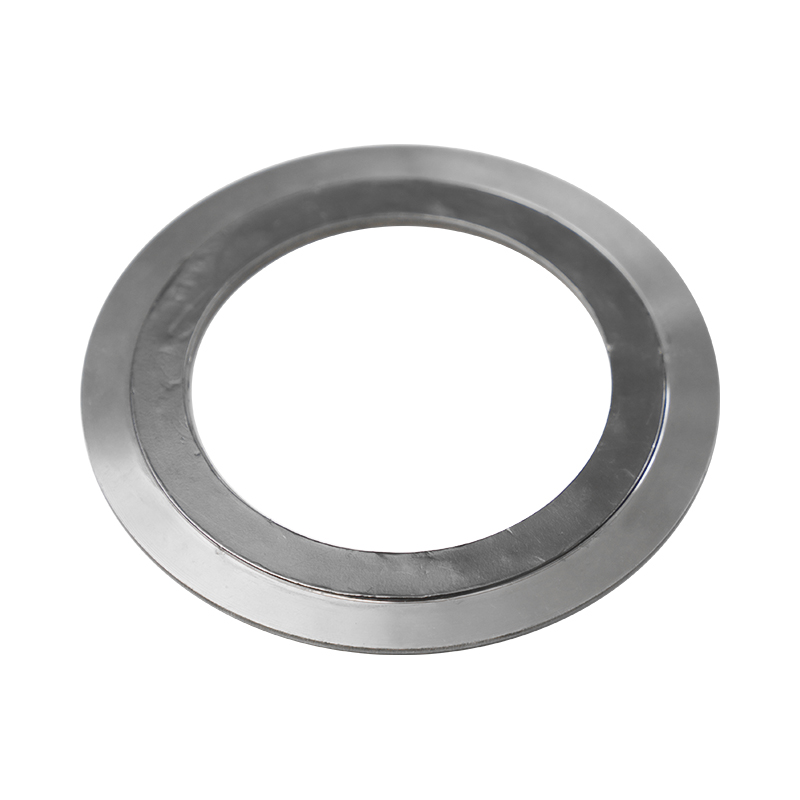
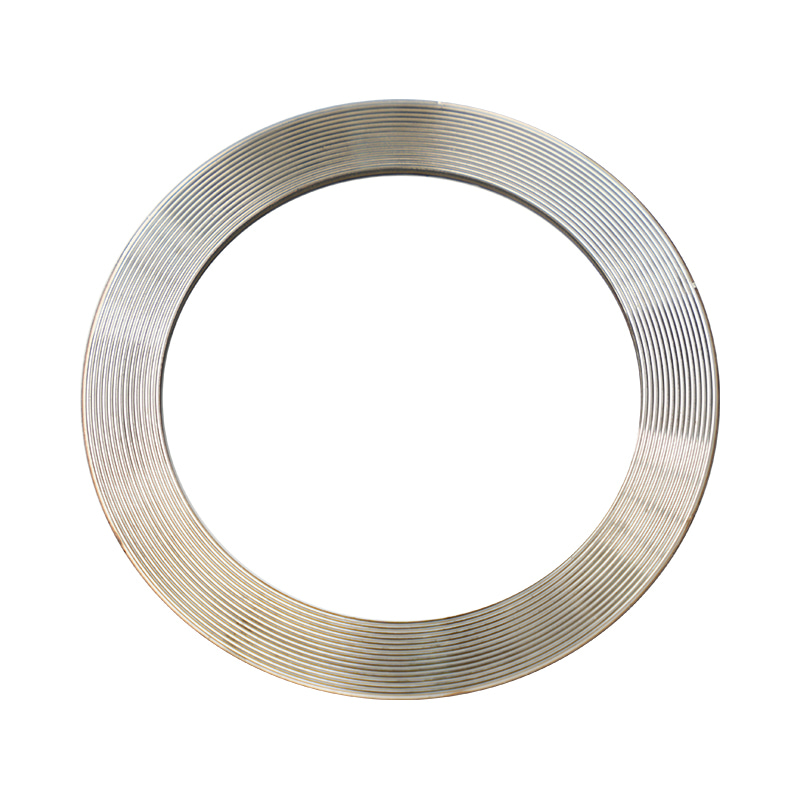
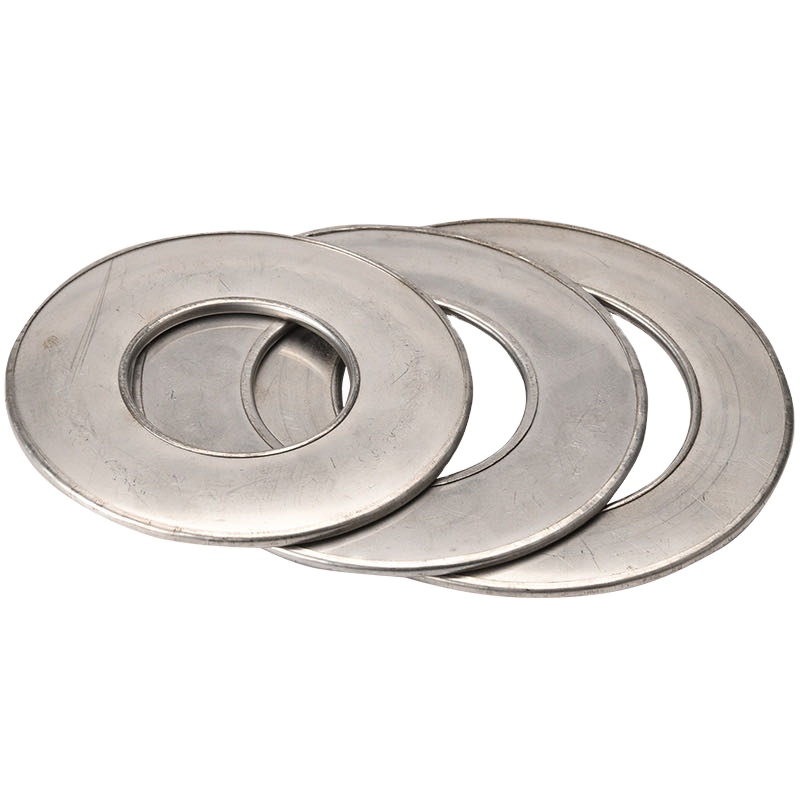
A corrugated metal gasket is a sealing element formed from thin metallic sheet — typically stainless steel, carbon steel, or alloy — pressed into a series of concentric or parallel ridges. Those ridges concentrate bolt load into narrow sealing lines, achieving leak-tight joints at lower overall flange stress than solid metal alternatives. This guide covers every key selection decision: application timing, temperature capability, required sealing stress, and heat exchanger suitability.
When Should You Use Corrugated Metal Gaskets?
Elevated Pressure and Temperature Combinations
Corrugated metal gaskets are the correct choice whenever system operating conditions exceed the capability of compressed fiber or PTFE sheet — typically above 260 C (500 F) or above 100 bar (1450 psi). The corrugated profile maintains residual stress across the sealing ridges even under thermal cycling that would relax a soft gasket.
Chemically Aggressive Media
Where the process fluid attacks elastomers or non-metallic fillers — concentrated acids, chlorinated solvents, hydrogen service, steam above 400 C — a bare metal or metal-jacketed corrugated gasket eliminates any organic component from the sealing path. Grade selection (316L, Inconel 625, titanium) maps directly to the corrosion resistance required.
Flanges with Limited Bolt Load
Because corrugated gaskets concentrate stress into the ridge contact lines rather than distributing it across the full gasket face, they achieve adequate sealing at lower assembly bolt loads than spiral wound or ring joint types. This makes them preferred for heat exchanger channel flanges where bolt count is limited and flange rigidity is constrained.
Thermal Cycling and Vibration Environments
Corrugated metal gaskets exhibit spring-back behavior — the ridges act as mechanical springs that recover partial contact stress after thermal relaxation or vibration-induced bolt load loss. This self-compensating behavior gives them a significant reliability advantage over solid flat metal gaskets in reciprocating compressor flanges, steam lines, and fired heater connections.
Flat-Face and Raised-Face Flange Standards
Corrugated gaskets are dimensionally compatible with ASME B16.5 and B16.47 raised-face flanges, EN 1092 PN series flanges, and API 660 heat exchanger flanges without machined grooves, making them a drop-in upgrade over fiber or graphite gaskets in existing installations where flange re-machining is not feasible.
Which Corrugated Metal Gasket Handles High Temperature?
Temperature capability is determined by the base metal alloy and the soft facing material — if any — laminated onto the corrugated core. The table below maps alloy selection to maximum continuous service temperature:
| Metal / Alloy |
Max Continuous Temp |
Key Property |
Typical Application |
| Carbon Steel (A36 / SS400) |
450 C (840 F) |
Low cost; good strength |
Low-alloy steam, water service |
| 316L Stainless Steel |
600 C (1112 F) |
Corrosion + oxidation resistance |
Process piping, heat exchangers |
| 321 / 347 Stainless Steel |
650 C (1200 F) |
Stabilized against sensitization |
High-temp steam, fired heaters |
| Alloy 800H / 800HT |
870 C (1600 F) |
High creep resistance |
Reformer outlets, pyrolysis lines |
| Inconel 625 |
980 C (1800 F) |
Oxidation + chloride resistance |
Nitric acid, offshore, waste heat |
| Hastelloy C-276 |
1000 C (1832 F) |
Broadest chemical resistance |
Aggressive acids, FGD systems |
Facing Materials and Their Temperature Limits
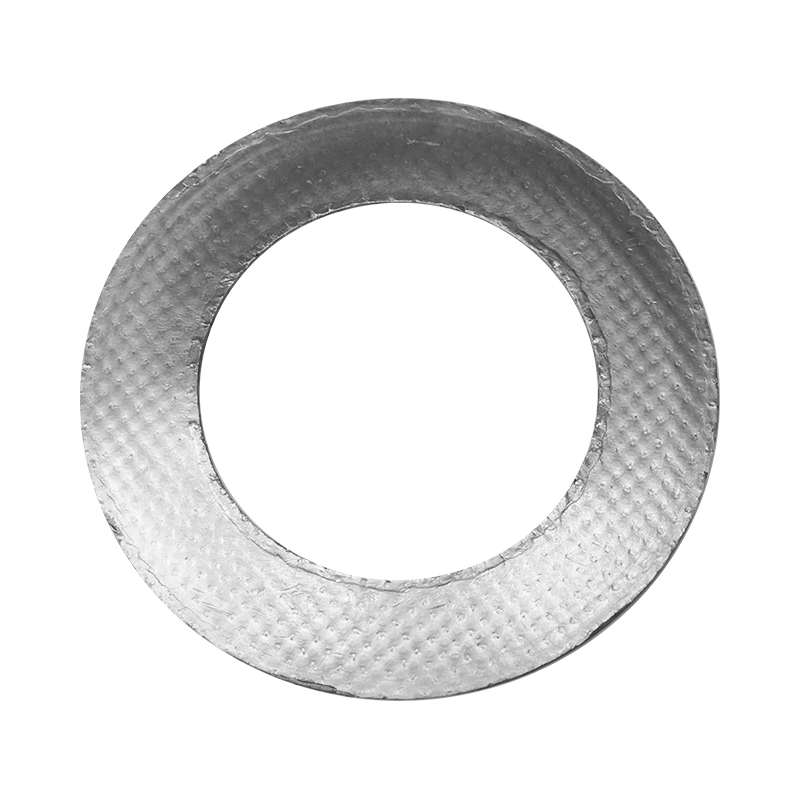
Many corrugated metal gaskets are supplied with a soft facing — graphite, PTFE, or mica — laminated onto the ridge faces to improve conformability on slightly damaged flange surfaces. Facing selection caps the usable temperature independently of the metal core:
- Flexible graphite facing: rated to 550 C (1022 F) in oxidising service; up to 3000 C in reducing/inert atmospheres
- PTFE facing: limited to 260 C (500 F); preferred for aggressive acid and pharmaceutical service
- Mica facing: rated to 900 C (1650 F); used in high-temperature furnace and fired-heater flanges
- Bare metal (no facing): maximum temperature determined by alloy alone; requires smoother flange finish (Ra 1.6 to 3.2 micron)
How Much Sealing Stress Does a Corrugated Metal Gasket Need?
Sealing stress requirements for corrugated metal gaskets are defined by two ASME parameters: the minimum design seating stress y (initial assembly) and the gasket factor m (operating maintenance factor). These values are lower than those for solid metal gaskets precisely because the corrugated ridges amplify local contact pressure.
01
Minimum Seating Stress (y)
For a bare 316L corrugated gasket, typical design seating stress y ranges from 55 to 90 MPa (8000 to 13,000 psi) depending on ridge pitch and sheet thickness. Graphite-faced corrugated gaskets require lower y values — typically 28 to 55 MPa (4000 to 8000 psi) — because the soft facing conforms under moderate stress.
02
Gasket Factor m (Operating)
The m factor for corrugated metal gaskets typically falls between 2.75 and 3.75. This means the residual gasket stress under operating pressure must equal at least 2.75 to 3.75 times the internal fluid pressure. This is significantly lower than ring joint gaskets (m = 5.5 to 6.5), reducing required bolt loads and flange thickness.
03
Bolt Load Calculation
Required bolt load W = y x Ag (seating condition) or W = 2b x pi x G x m x P (operating condition), where Ag is the gasket contact area, b is the effective seating width, G is the mean gasket diameter, and P is the design pressure. The controlling (higher) value governs stud sizing. For most DN100 to DN400 heat exchanger flanges, corrugated gaskets allow one to two bolt size reductions compared to ring joints.
04
Flange Surface Finish Requirement
Bare corrugated metal gaskets require a flange surface finish of Ra 1.6 to 3.2 microns (63 to 125 AARH). Graphite-faced corrugated gaskets tolerate Ra up to 6.3 microns (250 AARH), making them suitable for re-use on service-worn flanges without re-machining. Finish below Ra 0.8 microns is not recommended — too smooth a surface reduces friction and allows gasket creep under operating vibration.
What Gasket Suits Heat Exchangers Best?
Heat exchangers present the most demanding gasket environment in process plant: multiple flange joints in close proximity, differential thermal expansion between shell and tube bundle, limited bolt access, and frequent maintenance pull-aparts. The corrugated metal gasket addresses all four challenges more effectively than competing types for the majority of shell-and-tube applications.
Recommended
Corrugated Metal Gasket
- Low seating stress — no flange distortion on lightweight channel covers
- Spring-back compensates for bundle pull differential expansion
- Graphite-faced variants reseal reliably after maintenance pull-aparts
- API 660 and TEMA compliant dimensions as standard
- Cost-effective for sizes DN25 to DN1200
Alternative
Spiral Wound Gasket
- Higher seating stress required — risk of channel flange distortion
- Cannot be reused after compression; replacement at every pull-apart
- Superior for very high pressure above 250 bar in heavy-wall flanges
- Inner and outer rings add radial space constraints
- Higher unit cost; longer lead time for special alloys
For heat exchanger shell flanges in Class 150 to Class 600 (PN20 to PN100) service below 600 C, graphite-faced 316L corrugated gaskets represent the optimum balance of sealing reliability, maintenance convenience, and installed cost. Above Class 900 or in hydrogen partial pressure service above 50 bar, spiral wound or ring joint types should be evaluated on a case-by-case basis.
Frequently Asked Questions
Can corrugated metal gaskets be reused after a flange pull-apart?
Graphite-faced corrugated metal gaskets can typically be reused once if the graphite facing shows no tears, the metal core has not been permanently crushed below its design thickness, and the flange surfaces are in acceptable condition. Bare metal corrugated gaskets should not be reused — the initial seating permanently deforms the ridge tips and residual seating stress on reassembly will be insufficient for leak-tight service.
What is the difference between corrugated and serrated metal gaskets?
A serrated gasket has concentric V-profile grooves machined into a solid metal ring — the serrations are surface features on a thick substrate. A corrugated gasket is formed from thin sheet metal where the entire cross-section is wave-shaped, giving it elastic spring-back. Serrated gaskets require significantly higher seating stress and are typically used in ring groove flanges; corrugated gaskets are used on standard raised-face flanges at lower bolt loads.
How is corrugated metal gasket thickness specified?
Corrugated metal gaskets are specified by the compressed (installed) thickness, not the free-state thickness. Standard compressed thicknesses run from 1.5 mm to 4.5 mm. The free-state height is typically 1.5 to 2.5 times the compressed thickness. Dimensional standards for heat exchanger gaskets follow ASME B16.20, EN 1514-6, and API 660 Appendix G depending on the project specification.
Do corrugated metal gaskets require a special installation torque sequence?
Yes. Corrugated metal gaskets require a cross-pattern torquing sequence applied in a minimum of three passes: 30% of target torque, 70%, then 100%, followed by a final pass at 100% after thermal conditioning of the joint at operating temperature. This progressive loading ensures uniform ridge compression across the full gasket circumference and prevents localized over-crush that would eliminate the spring-back benefit.



 Eng
Eng 
 русский
 Home / News / Industry News / Corrugated Metal Gasket Guide: Structure, Facing Materials, Performance Benefits, and Industrial Applications
  2026.06.04
 Industry News

 Home
Home +86 152 4020 4398
 zdjt004@jsjtmf.vip
 No.2 Xingyuan East Road, Yuanzhu Town Industrial Park, Taixing City, Jiangsu Province, China
