


 Eng
Eng 
 русский

Gland Packing: Materials, Cutting, Uses and Why It Seals
 2026.05.09
 Industry News
Article Directory
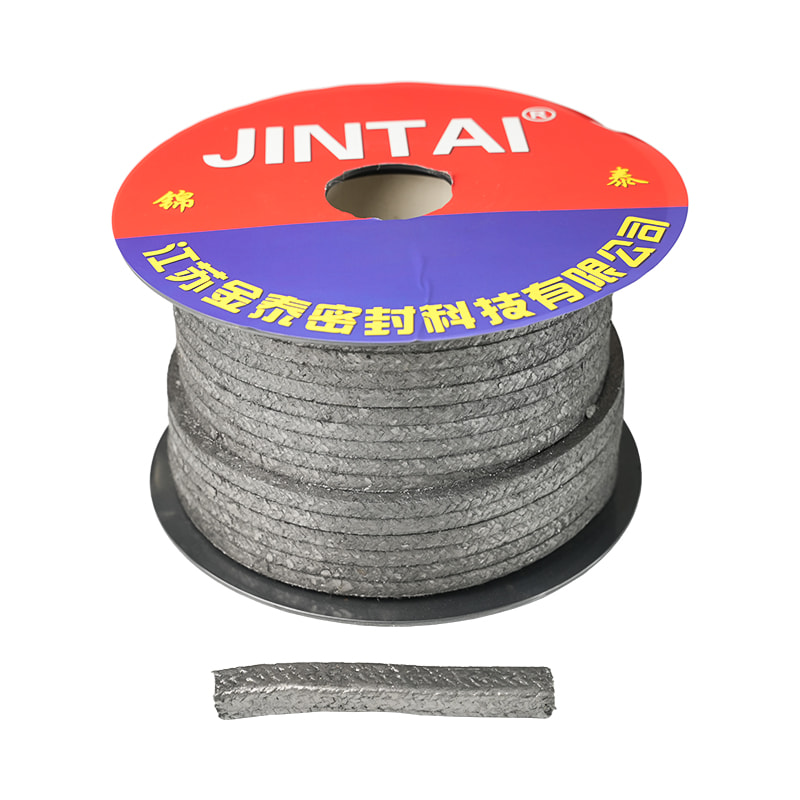
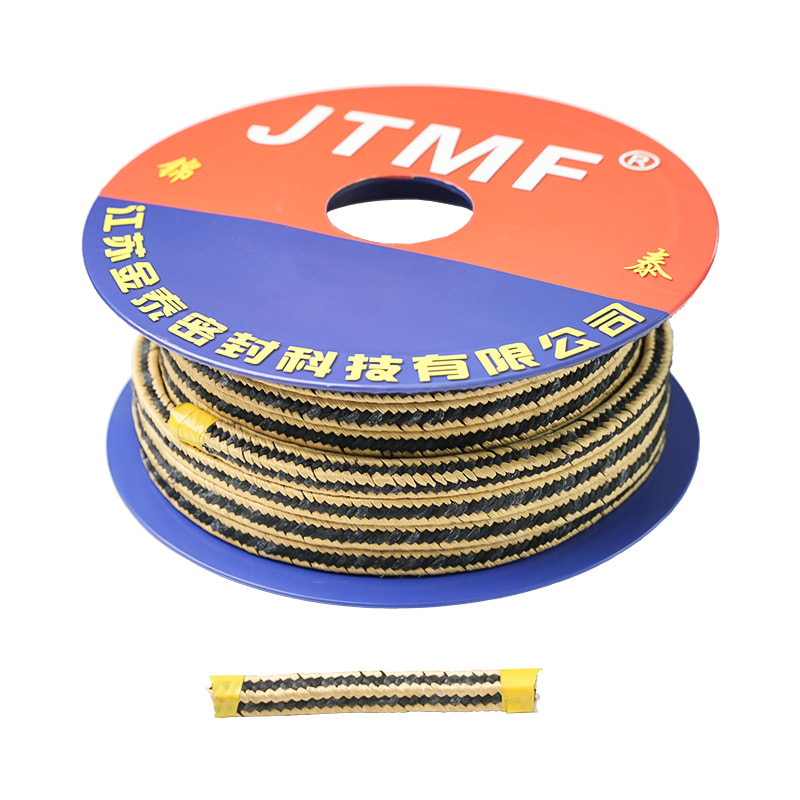
Gland packing is a compression sealing material inserted into a stuffing box to prevent leakage around a rotating or reciprocating shaft. It is made from braided fibres — commonly PTFE, graphite, aramid, acrylic, or hemp — and is used across pumps, valves, and mixers wherever a dynamic seal is required between a moving shaft and its housing.
What Is Gland Packing Made Of?
The choice of material directly determines temperature resistance, chemical compatibility, and service life. Modern gland packing is available in a wide range of fibres and impregnants.
| Material | Max Temp (°C) | Key Advantage | Typical Use |
|---|---|---|---|
| PTFE (expanded) | 260 | Chemically inert, low friction | Food, pharma, aggressive chemicals |
| Graphite | 450 (steam) / 3000 (inert gas) | Extreme heat and pressure tolerance | Steam valves, refineries, power plants |
| Aramid (Kevlar) | 250 | High tensile strength, abrasion resistant | Slurry pumps, abrasive media |
| Acrylic fibre | 120 | Cost-effective, general purpose | Water, mild chemicals |
| Hemp / flax | 100 | Biodegradable, easy to install | Water mains, low-pressure valves |
| Carbon fibre | 300 | High conductivity, excellent sealability | High-speed rotating equipment |
Most packing is also impregnated with lubricants such as PTFE dispersion, mineral oil, or grease to reduce shaft wear and ease installation. The braid pattern — square, interlocked, or corner-reinforced — also affects how evenly the packing seats under compression.
How to Cut Gland Packing
Incorrect cutting is one of the most common causes of premature seal failure. A poorly cut ring allows bypass leakage from day one. Follow this process to get a clean, accurate cut every time.
Wrap-and-Cut Method (Most Accurate)
- Wrap the packing rope tightly around the shaft or a mandrel of identical diameter.
- Mark the overlap with a pencil, then unwrap the rope and lay it flat.
- Cut with a sharp, single-stroke knife on a hard cutting board — never use scissors, which crush the braid and distort the cross-section.
- The cut face should be perfectly square (90 degrees) to the rope axis for butt-joint rings, or at a 45-degree angle for skive-cut rings.
Butt Joint vs. Skive Cut
A butt joint (straight 90-degree cut) is standard for most applications and is easier to produce accurately. A skive cut (45-degree mitre) increases the contact area at the joint and is preferred for high-pressure service above 40 bar, as it reduces the risk of the joint opening under load.
Sizing Rules
- Packing cross-section = (Stuffing box bore – Shaft diameter) / 2. For example, a 50 mm bore with a 30 mm shaft requires packing with a 10 mm cross-section.
- Oversized packing forced into a box generates excess heat and accelerates shaft scoring.
- Undersized packing will not fill the box and will extrude under pressure.
- The number of rings needed is typically 4 to 6 for standard pumps, with a lantern ring fitted at ring 3 or 4 in water-cooled or flush-injection applications.
When Is Gland Packing Used?
Gland packing is the preferred sealing method when one or more of the following conditions apply.
Equipment Types
- Centrifugal and reciprocating pumps — the most common application. Gland packing handles shaft runout and vibration better than rigid mechanical seals in worn or older equipment.
- Gate, globe, and butterfly valves — the valve stem moves linearly or rotationally through the gland each time the valve operates.
- Agitators and mixers — slow shaft speeds and large shaft diameters make packing more economical than custom mechanical seals.
- Marine stern tubes — traditional flax or modern PTFE packing seals the propeller shaft where it exits the hull.
- Hydraulic cylinders and presses — reciprocating rods in heavy industrial equipment often use braided packing in the rod gland.
Operating Conditions That Favour Packing
- Shaft diameters above 75 mm, where mechanical seal cost becomes prohibitive.
- Shafts with up to 1.5 mm of radial runout, which would destroy a mechanical seal face.
- Sites without skilled mechanical seal technicians — packing can be replaced with basic tools.
- Fluids containing abrasive solids (slurries, paper stock, mineral processing) where a controlled weep from the packing continuously flushes particles away from the sealing zone.
- Intermittent or infrequent operation, where the small controlled leakage of packing (typically 5 to 60 drops per minute) is acceptable and the low initial cost is valued.
Why Gland Packing Seals Are Used
Despite the widespread adoption of mechanical seals since the 1970s, gland packing remains the dominant sealing method in many industries. The reasons are practical and economic.
Lower Initial and Maintenance Cost
A set of packing rings for a 50 mm pump shaft typically costs between EUR 5 and EUR 40, depending on material. A comparable cartridge mechanical seal for the same pump costs EUR 200 to EUR 800 or more. Replacement requires no precision alignment, no lapping of seal faces, and no special tools — a maintenance technician with a packing hook, knife, and torque wrench can complete the job in under 30 minutes.
Tolerance of Difficult Conditions
Mechanical seals are sensitive to shaft deflection, vibration, and transient dry running. Gland packing accommodates shaft runout of up to 1.5 mm and can survive brief periods without liquid lubrication — a common occurrence during pump start-up or cavitation events. In abrasive slurry service, the deliberate controlled leakage of packing (supported by a flush water injection) prevents grit from migrating into the seal zone, something a mechanical seal cannot achieve without complex barrier fluid systems.
Regulatory and Safety Contexts
In steam systems and high-temperature valve applications, graphite gland packing is often the only sealing solution rated to the required temperature class. Many power station valve standards (EN 13555, ASME B16.20) specifically reference flexible graphite packing as a compliant solution for Class 600 to Class 2500 valves.
Ease of Adjustment in the Field
A gland packing seal can be tightened incrementally by advancing the gland follower nuts — often just one-sixth of a turn at a time — without shutting down the equipment. This live adjustment capability is invaluable in continuous-process industries such as paper mills, water treatment, and chemical plants where unplanned shutdowns carry significant cost.
Controlled Leakage as a Feature, Not a Flaw
Gland packing is not designed to achieve zero leakage. A weep rate of 5 to 60 drops per minute lubricates the shaft sleeve and dissipates heat generated by compression friction. Overtightening to stop all visible leakage overheats the packing, carbonises lubricants, and scores the shaft — typically causing catastrophic failure within hours. In non-toxic, non-flammable services such as water, this weep is entirely acceptable under standard industrial and environmental guidelines.
Gland Packing vs. Mechanical Seals: When to Choose Each
| Factor | Gland Packing | Mechanical Seal |
|---|---|---|
| Initial cost | Low (EUR 5 – EUR 40) | High (EUR 200 – EUR 800+) |
| Installation skill required | Basic | Specialised |
| Leakage | Small controlled weep | Near-zero |
| Shaft runout tolerance | Up to 1.5 mm | Less than 0.05 mm |
| Abrasive/slurry media | Suitable with flush | Problematic |
| Hazardous / toxic fluids | Not recommended | Preferred |
| High shaft speed (above 10 m/s) | Limited | Preferred |
| Field adjustment during operation | Yes | No |
Installation Tips to Maximise Packing Life
- Always remove all old packing using a packing hook — never try to add new rings on top of worn packing.
- Inspect the shaft sleeve for scoring. Grooves deeper than 0.1 mm will cut new packing within days. Sleeve replacement is cheaper than repeated repacking.
- Stagger ring joints by 90 degrees around the shaft to prevent a continuous leak path along the joint line.
- Hand-tighten the gland follower only at first start-up, then allow the packing to run for 30 minutes before gradually tightening to achieve the target weep rate.
- For graphite packing in steam service, use a torque wrench and follow the manufacturer's bolt load specification — typically 20 to 40 Nm on M12 gland studs for Class 150 valves.

 Home
Home +86 152 4020 4398
 zdjt004@jsjtmf.vip
 No.2 Xingyuan East Road, Yuanzhu Town Industrial Park, Taixing City, Jiangsu Province, China
Copyright © 2024. Jiangsu Jintai Sealing Technology Co., Ltd. All rights reserved. Custom Sealing Gaskets, Sealing Packing, Rubber Products
