


 Eng
Eng 
 русский
 Home / News / Industry News / How Does the Material Hardness of a Metal Gasket Ring Affect Seal Integrity in Extreme Temperature Applications?
 How Does the Material Hardness of a Metal Gasket Ring Affect Seal Integrity in Extreme Temperature Applications?
 2026.02.26
 Industry News
Article Directory
- 1 1. The Fundamental Relationship Between Hardness and Seating Stress
- 2 2. Hardness Dynamics in Extreme Temperature Applications
- 3 3. Preventing Work Hardening During Installation
- 4 4. The Role of Surface Finish and Hardness Interaction
- 5 5. Conclusion: Engineering the Perfect Seal
- 6 Frequently Asked Questions (FAQ)
- 6.1 1. What happens if my metal gasket ring is harder than the flange?
- 6.2 2. Why are high temperature metal gasket materials like Inconel used instead of Stainless Steel?
- 6.3 3. How do I find the correct ring joint gasket hardness requirements for my project?
- 6.4 4. Does Jiangsu Jintai Sealing provide custom hardness profiles?
- 6.5 5. Is a metal gasket ring reusable after high-temperature service?
- 7 Industry References
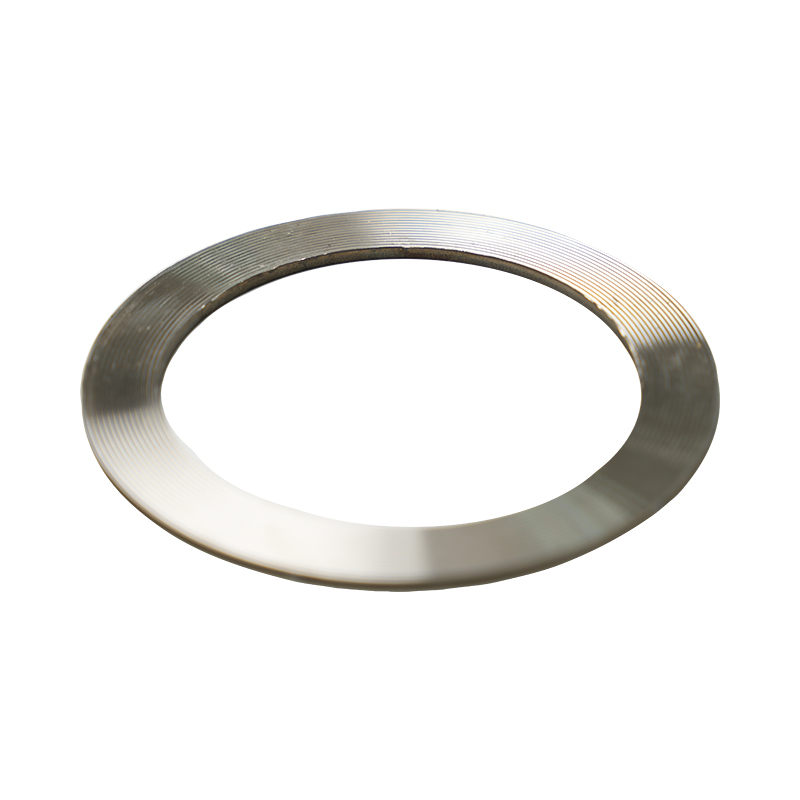
In high-pressure and high-temperature environments, the mechanical performance of a metal gasket ring is the definitive factor in preventing catastrophic system failures. Engineering a reliable seal requires a delicate balance between the hardness of the gasket and the flange surface. Jiangsu Jintai Sealing Technology Co., Ltd., founded in 2004 in Taixing, Jiangsu Province, has spent decades researching these variables. Our high-end brand, Nofstein, focuses on technological innovation and advanced manufacturing processes to meet the stringent needs of the shipping, power, and chemical industries. Understanding the metallurgy of high temperature metal gasket materials is essential for engineers designing systems that must withstand thermal cycling and extreme pressures.
1. The Fundamental Relationship Between Hardness and Seating Stress
The primary sealing mechanism of a metal gasket ring relies on plastic deformation. For a successful seal, the gasket material must be softer than the flange material to ensure that the gasket flows into the microscopic irregularities of the flange face without damaging the flange itself. If the ring joint gasket hardness requirements are not met—specifically if the gasket is too hard—it will fail to "seat" properly, leading to leak paths. Conversely, a gasket that is too soft may over-compress and lose its structural integrity under high bolt loads. This relationship is critical when calculating the minimum seating stress required to achieve a gas-tight seal.
| Parameter | Gasket Harder Than Flange | Gasket Softer Than Flange (Optimized) |
| Deformation Type | Potential Flange Face Damage | Plastic Deformation of Gasket |
| Seal Integrity | Low (Risk of bypass leakage) | High (Fills flange irregularities) |
| Reuse Potential | High risk of flange repair | Protected flange surfaces |
2. Hardness Dynamics in Extreme Temperature Applications
Extreme temperatures significantly alter the physical properties of metals, particularly their yield strength and hardness. As temperature increases, most metals undergo thermal softening, which can lead to a phenomenon known as "creep" or "stress relaxation." When selecting metal gasket ring materials for temperatures exceeding 500°C, engineers must consider the hardness vs. temperature curve for metal seals. While a material might meet hardness specifications at ambient temperature, it may become excessively soft at operating temperatures, causing a loss of gasket stress and subsequent leakage. This is why Nofstein utilizes specialized alloys and heat treatment processes to maintain a stable hardness profile throughout the thermal cycle.
Thermal Softening Comparison: Stainless Steel vs. Inconel
Standard stainless steels lose hardness rapidly at high temperatures, whereas nickel-based superalloys like Inconel maintain their mechanical properties, ensuring long-term seal reliability in extreme heat.
| Material Type | Hardness at 20°C (HB) | Hardness at 600°C (HB) | Creep Resistance |
| Soft Iron | ~90 | Very Low | Poor |
| 316L Stainless Steel | ~150 | ~95 | Moderate |
| Inconel 625 | ~200 | ~165 | Excellent |
3. Preventing Work Hardening During Installation
Another critical factor is the rate of work hardening. During the initial bolting phase, the metal gasket ring undergoes strain. If the material work-hardens too quickly, it may become brittle before a complete seal is achieved. This is a common issue when comparing solid metal vs. serrated gasket performance. High-quality seals must maintain enough ductility to accommodate the flange rotations and thermal expansions that occur during system startup. Jiangsu Jintai Sealing Technology employs precision annealing processes to ensure that our ring joint gasket hardness requirements are strictly controlled, preventing the premature embrittlement that leads to fatigue cracking in vibration-heavy environments.
4. The Role of Surface Finish and Hardness Interaction
The interaction between surface roughness and material hardness is a key technical detail. A harder metal gasket ring requires a much finer flange surface finish (lower Ra value) to achieve a seal, as it cannot easily deform into deep grooves. Engineers must match the industrial metal gasket hardness specs to the specific flange type, whether it be a Raised Face (RF) or a Ring Type Joint (RTJ). In RTJ systems, the "coining" effect—where the gasket creates a new contact surface within the groove—is entirely dependent on the hardness differential. Our technical team at Jintai Sealing recommends a hardness difference of at least 30-40 Brinell points between the flange and the gasket to ensure optimal coining.
Technical Checkpoints for Engineers:
- Hardness Verification: Always verify the Brinell (HB) or Rockwell (HRB) hardness against the flange material.
- Thermal Cycling: Factor in the "Coefficient of Thermal Expansion" (CTE) to prevent mechanical loosening.
- Media Compatibility: Ensure the metal gasket ring material is chemically resistant to the process fluid at peak temperatures.
- Quality Certification: Jintai Sealing products are CCS classification society identified, ensuring global maritime and industrial compliance.
5. Conclusion: Engineering the Perfect Seal
The material hardness of a metal gasket ring is not just a static specification; it is a dynamic variable that dictates the safety and efficiency of industrial systems. By selecting the correct high temperature metal gasket materials and adhering to strict ring joint gasket hardness requirements, companies can avoid costly downtime and environmental hazards. Jiangsu Jintai Sealing Technology Co., Ltd., through our Nofstein brand and our extensive history of scientific experimentation, remains a global leader in providing these high-specification sealing solutions. From the 2010 World Expo to our modern Sealing Technology Industrial Park, we continue to push the boundaries of what is possible in sealing science.
Frequently Asked Questions (FAQ)
1. What happens if my metal gasket ring is harder than the flange?
If the gasket is harder than the flange, it will not deform sufficiently to fill the surface irregularities. Instead, it will indent the flange face, causing permanent damage that will require expensive resurfacing or flange replacement to achieve a seal in the future.
2. Why are high temperature metal gasket materials like Inconel used instead of Stainless Steel?
Stainless steel suffers from "stress relaxation" at very high temperatures, meaning it loses its spring-like tension. Inconel and other superalloys maintain their hardness and elasticity, making them necessary for sealing in extreme temperature applications.
3. How do I find the correct ring joint gasket hardness requirements for my project?
Hardness requirements are typically governed by standards such as ASME B16.20 or API 6A. These standards specify maximum hardness values for various materials (e.g., Soft Iron < 90 HB, Stainless Steel < 160 HB) to ensure they are always softer than the mating flanges.
4. Does Jiangsu Jintai Sealing provide custom hardness profiles?
Yes. Through our Nofstein brand, we can customize heat treatment and annealing processes to meet specific hardness ranges required for unique industrial metal gasket hardness specs or specialized pneumatic/hydraulic systems.
5. Is a metal gasket ring reusable after high-temperature service?
Generally, no. Because the gasket must undergo plastic deformation to seal, its internal structure is permanently altered. Furthermore, high-temperature service can cause oxidation and further work hardening, making it too brittle to provide a reliable seal a second time.
Industry References
- ASME B16.20: Metallic Gaskets for Pipe Flanges: Ring-Joint, Spiral-Wound, and Jacketed.
- API Standard 6A: Specification for Wellhead and Christmas Tree Equipment (Hardness Requirements for RTJ).
- ASTM E10: Standard Test Method for Brinell Hardness of Metallic Materials.
- Jiangsu Jintai Sealing Technology Internal Research: Effects of Thermal Softening on Nofstein Superalloys (2023).

 Home
Home +86 152 4020 4398
 zdjt004@jsjtmf.vip
 No.2 Xingyuan East Road, Yuanzhu Town Industrial Park, Taixing City, Jiangsu Province, China
Copyright © 2024. Jiangsu Jintai Sealing Technology Co., Ltd. All rights reserved. Custom Sealing Gaskets, Sealing Packing, Rubber Products
