


 Eng
Eng 
 русский
 Home / News / Industry News / Engineering Protocol: Best Practices for carbon gland packing Installation
 Engineering Protocol: Best Practices for carbon gland packing Installation
 2026.04.20
 Industry News
Article Directory
- 1 Preparation and Dimensional Accuracy: How to Calculate Gland Packing Ring Size
- 2 Mechanical Material Analysis: Carbon vs graphite gland packing performance
- 3 Precision Cutting and Fitting: Best way to cut gland packing rings
- 4 Compression Dynamics and Leakage Control
- 5 Post-Installation Procedures: Gland Packing Break-in Period Procedure
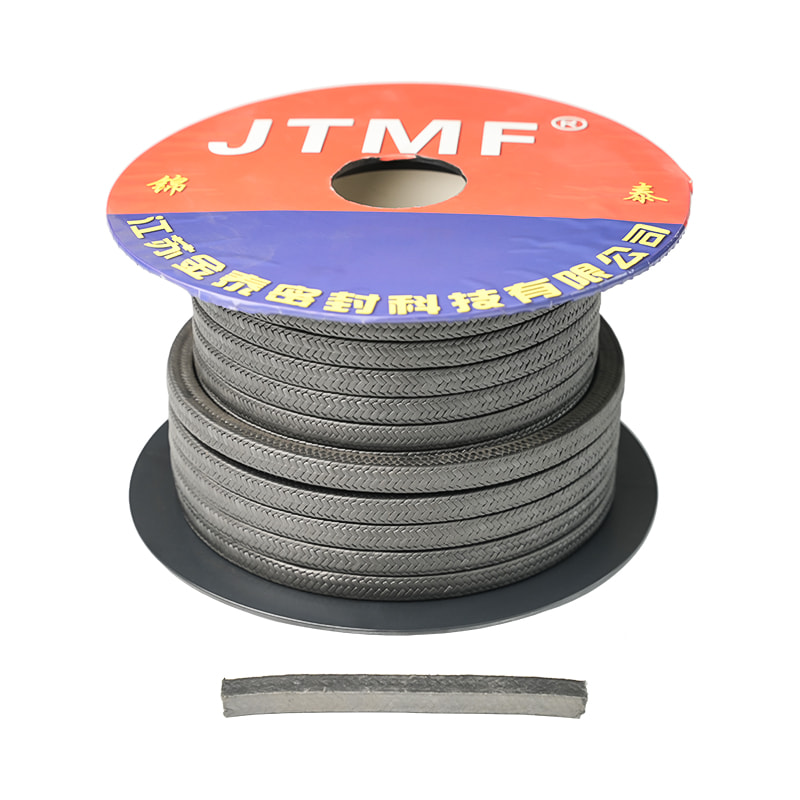
The operational reliability of centrifugal pumps and high-pressure valves depends heavily on the integrity of the stuffing box seal. Utilizing carbon gland packing is a standard requirement for applications involving high peripheral speeds and aggressive thermal cycles. However, achieving a zero-leakage or controlled-leakage state requires strict adherence to mechanical tolerances and installation sequences to prevent premature component failure.
Jiangsu Jintai Sealing Technology Co., Ltd., founded in 2004 in Taixing, Jiangsu Province, is a comprehensive sealing technology enterprise specializing in high-end solutions under its Nofstein brand. With a decade of experience in the sealing technology industrial park since 2013, Jintai has achieved CCS classification society identification and passed rigorous environmental tests such as the CiT and Chinese Academy of Coal Sciences tests. Our expertise spans the shipping, power, and chemical industries, providing customized sealing materials that integrate advanced manufacturing processes to meet global standards.
Preparation and Dimensional Accuracy: How to Calculate Gland Packing Ring Size
Before installation, verifying the stuffing box dimensions is critical. To determine how to calculate gland packing ring size, subtract the shaft diameter from the stuffing box bore diameter and divide by two. This gives the required cross-sectional size. It is imperative to check for shaft sleeve wear from carbon packing from previous cycles; if the shaft run-out exceeds 0.08 mm or the surface finish is coarser than 0.8 Ra, the new packing will fail to seat correctly, leading to localized frictional heating.
Mechanical Material Analysis: Carbon vs graphite gland packing performance
Engineers must distinguish between carbon vs graphite gland packing performance when selecting a seal. Carbon fiber packing offers significantly higher tensile strength and structural stability in high-pressure environments compared to flexible graphite. While graphite is an excellent self-lubricator, high temperature carbon fiber packing specifications often include a sacrificial lubricant or a PTFE impregnation to handle pH ranges from 0 to 14 (except for strong oxidizers) and temperatures exceeding 600 degrees Celsius in non-oxidizing atmospheres.
Chemical resistance of carbon fiber seals and Thermal Dissipation
The chemical resistance of carbon fiber seals makes them indispensable in pulp and paper or chemical processing. Carbon's high thermal conductivity allows it to dissipate heat away from the shaft interface more effectively than synthetic fibers, reducing the risk of "shaft scoring." This thermal management is a hallmark of the Nofstein high-end sealing product line, developed to adapt to changing market needs and improve MTBF (Mean Time Between Failure).
Precision Cutting and Fitting: Best way to cut gland packing rings
The best way to cut gland packing rings is to use a mandrel of the exact same diameter as the shaft. Rings should be cut at a 45-degree angle (skive cut) for maximum sealing surface, or a 90-degree angle (butt cut) for easier installation in tight spaces. Each ring must be checked for fit individually; there should be no gap between the ring ends when seated in the stuffing box. Improperly cut joints are the primary reason why is gland packing leaking after installation.
Compression Dynamics and Leakage Control
For pump applications, gland packing compression percentage for pumps should be calculated to allow for necessary lubrication. Unlike valves, pump packing requires a "leakage for cooling" rate—typically 30 to 60 drops per minute. Initially, the gland nuts should be tightened finger-tight. During the gland packing break-in period procedure, the gland should be tightened in small increments (one flat of the nut at a time) while the pump is running until the desired leak rate is achieved.
| Application Type | Recommended Compression | Target Leak Rate |
| Centrifugal Pumps | 20% - 25% of cross-section | 30-60 Drops/Minute |
| Reciprocating Pumps | 25% - 30% of cross-section | 10-20 Drops/Minute |
| Static Valve Stems | 30% - 40% of cross-section | Zero Visible Leakage |
| Agitators/Mixers | 20% - 30% of cross-section | Controlled Vapor Leakage |
Post-Installation Procedures: Gland Packing Break-in Period Procedure
A successful gland packing break-in period procedure prevents the carbon gland packing from glazing. Glazing occurs when excessive heat at the interface melts the lubricants before the packing has properly seated. If the stuffing box temperature exceeds 80 degrees Celsius during the first hour of operation, the gland nuts should be slightly loosened to increase leakage and promote cooling. Once the temperature stabilizes, final adjustments can be made.
Frequently Asked Questions
Can I use a lantern ring with carbon fiber packing?
Yes, a lantern ring is essential for clean flush water injection when handling abrasive slurries, preventing the carbon gland packing from becoming embedded with particles.
Why is my gland packing smoking during startup?
This is usually due to insufficient lubrication or excessive initial compression. Loosen the gland immediately to increase the leak rate and cool the shaft.
How many rings should I install?
Most stuffing boxes are designed for 5 to 7 rings. If using pre-compressed carbon rings for valve sealing, fewer rings may be required due to the higher density of the material.
Does carbon packing cause electrolytic corrosion?
High-purity carbon is generally inert, but in certain saltwater environments, an active corrosion inhibitor (like zinc powder) is often added to the packing to protect the stainless steel shaft.
What is the pH limit for Nofstein carbon packing?
Our high-end carbon fiber packing is designed to handle the full pH 0-14 range, except for concentrated nitric acid and other strong oxidizing agents.
Technical References
1. FSA-PS-001-02: Fluid Sealing Association Standard for Gland Packing Installation.
2. ISO 3069: Dimensions of Stuffing Boxes for Centrifugal and Rotary Pumps.
3. ASTM F1276: Standard Test Method for Creep Relaxation of Laminated Composite Gasket Materials.

 Home
Home +86 152 4020 4398
 zdjt004@jsjtmf.vip
 No.2 Xingyuan East Road, Yuanzhu Town Industrial Park, Taixing City, Jiangsu Province, China
Copyright © 2024. Jiangsu Jintai Sealing Technology Co., Ltd. All rights reserved. Custom Sealing Gaskets, Sealing Packing, Rubber Products
