


 Eng
Eng 
 русский
 Home / News / Industry News / How to Choose the Right Metal Gasket Seal Material for High-Pressure Industrial Applications?
 How to Choose the Right Metal Gasket Seal Material for High-Pressure Industrial Applications?
 2026.03.26
 Industry News
Article Directory
- 1 The Mechanical Requirements of High-Pressure Sealing
- 2 Environmental Factors: Corrosion and Chemical Resistance
- 3 Technical Comparisons: Solid Metal vs. Spiral Wound Designs
- 4 Ensuring Longevity: Installation and Quality Control
- 5 Conclusion: The Nofstein Standard for Excellence
- 5.1 Frequently Asked Questions (FAQ)
- 5.1.1 1. When should I prioritize Inconel over Stainless Steel for a gasket?
- 5.1.2 2. Can I reuse a solid metal gasket seal?
- 5.1.3 3. How does flange surface finish affect the seal?
- 5.1.4 4. Are there environment-friendly alternatives for high-pressure seals?
- 5.1.5 5. What is the advantage of CCS classification society identification?
- 5.2 Industry References
- 5.1 Frequently Asked Questions (FAQ)
In the demanding landscape of modern engineering, the integrity of a metal gasket seal is paramount to the safety and efficiency of high-pressure systems. Whether in petrochemical refineries, power generation plants, or marine shipping, the selection of sealing materials is a sophisticated process that must account for thermal expansion, chemical compatibility, and mechanical stress. Jiangsu Jintai Sealing Technology Co., Ltd., established in 2004, has spent decades researching metal gasket seal technology. Through our high-end brand, Nofstein, we integrate advanced manufacturing processes to provide specialized solutions that meet CCS classification society standards.
The Mechanical Requirements of High-Pressure Sealing
When operating in high-pressure environments, a gasket must maintain its seal under significant bolt loads and internal pressures. Understanding what is a metal gasket seal used for in these contexts involves analyzing the material's yield strength and its ability to conform to flange imperfections. A high pressure metal gasket seal must be rigid enough to resist blowout while retaining the elasticity needed for thermal cycling.
Material Elasticity and Sealing Efficiency
- Soft Metals: Materials like annealed copper provide excellent conformability at lower bolt loads.
- Hard Alloys: Stainless steels and exotic alloys offer the best metal gasket for high temperature and pressure scenarios where mechanical strength is non-negotiable.
| Material Type | Pressure Rating | Conformability | Thermal Stability |
| Soft Copper | Medium | Excellent | Moderate |
| 316L Stainless Steel | High | Moderate | High |
| Inconel / Monel | Extreme | Low | Excellent |
Environmental Factors: Corrosion and Chemical Resistance
The chemical environment is just as critical as the pressure rating. Engineers often ask, how to choose metal gasket material for corrosive environments? In the chemical and iron and steel industries, the presence of acids or chlorides dictates the use of specific alloys. For instance, while stainless steel metal gasket seal benefits include oxidation resistance, they may fail in the presence of concentrated chlorides unless upgraded to a higher molybdenum grade. In such cases, a corrosion resistant metal gasket seal becomes the only viable technical choice.
Chemical Compatibility Sequence
- Identify the media (gas, liquid, or steam).
- Evaluate the concentration of corrosive agents.
- Match the metal gasket seal material's electrochemical potential to the flange material to prevent galvanic corrosion.
Technical Comparisons: Solid Metal vs. Spiral Wound Designs
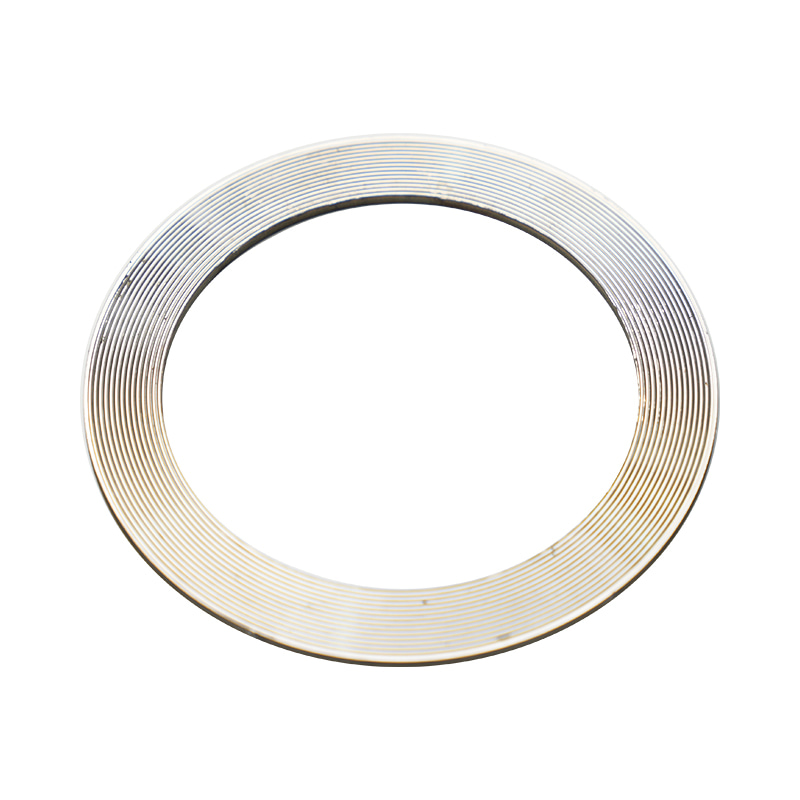
A frequent point of technical debate is spiral wound vs solid metal gasket performance. Spiral wound gaskets, which we produce using advanced winding technology, offer a "spring-like" action that is ideal for systems with fluctuating temperatures. However, for ultra-high-pressure applications in the oil and gas sector, a solid metal ring joint gasket (RTJ) is often preferred due to its massive cross-section and metal-to-metal contact. Choosing industrial metal gasket seals requires a deep understanding of these structural differences.
| Design Type | metal gasket seal Structure | Primary Advantage |
| Solid Metal Ring | Single-piece machined metal | Highest pressure resistance |
| Spiral Wound | Alternating metal and filler | Excellent recovery and resilience |
| Kammprofile | Serrated metal core | High reliability at lower bolt loads |
Ensuring Longevity: Installation and Quality Control
Even the most durable metal gasket seal can fail if not installed with precision. Following a strict metal gasket seal installation guide is necessary to ensure uniform compression. At Jiangsu Jintai, our project at the Sealing Technology Industrial Park utilizes sophisticated quality manuals to monitor every stage of production. From custom metal gasket seal design for specialized machinery to the final inspection, we ensure our products meet the "CiT" environmental protection tests and national nonmetal tests.
Installation Best Practices
- Verify flange surface finish (typically 125-250 RMS for most metal gaskets).
- Use calibrated torque wrenches to achieve calculated bolt stress.
- Ensure the reusable metal gasket seal (if applicable) is inspected for surface score marks before re-installation.
Conclusion: The Nofstein Standard for Excellence
Choosing the right metal gasket seal is a multi-disciplinary challenge. By combining decades of manufacturing experience with innovative materials, Jiangsu Jintai Sealing Technology provides the rigorous reliability required for 2026's industrial demands. Our commitment to excellence ensures that every seal we export to Eastern Europe, Southeast Asia, and beyond stands up to the toughest pressures.
Frequently Asked Questions (FAQ)
1. When should I prioritize Inconel over Stainless Steel for a gasket?
Inconel is the best metal gasket for high temperature and pressure when temperatures exceed 600°C or when extreme resistance to stress-corrosion cracking is required.
2. Can I reuse a solid metal gasket seal?
While some designs allow for it, a reusable metal gasket seal should generally be avoided in high-pressure critical applications as the initial compression causes work-hardening of the metal.
3. How does flange surface finish affect the seal?
The metal gasket seal relies on a specific surface roughness to "grip" the metal. If the flange is too smooth, the gasket may slip; if too rough, it may not seal micro-leakage paths.
4. Are there environment-friendly alternatives for high-pressure seals?
Yes, Jiangsu Jintai specializes in environment-friendly asbestos-free gaskets and specialized rubber materials that provide high-performance sealing without ecological harm.
5. What is the advantage of CCS classification society identification?
This certification ensures that our metal gasket seal products meet the rigorous safety and quality standards required for marine and shipping industries globally.
Industry References
- ASME B16.20: Metallic Gaskets for Pipe Flanges - Ring-Joint, Spiral-Wound, and Jacketed.
- ASTM F36: Standard Test Method for Compressibility and Recovery of Gasket Materials.
- FSA (Fluid Sealing Association): Gasket Installation Procedures and Technical Manuals.
- CCS (China Classification Society): Quality System Identification for Marine Components.

 Home
Home +86 152 4020 4398
 zdjt004@jsjtmf.vip
 No.2 Xingyuan East Road, Yuanzhu Town Industrial Park, Taixing City, Jiangsu Province, China
Copyright © 2024. Jiangsu Jintai Sealing Technology Co., Ltd. All rights reserved. Custom Sealing Gaskets, Sealing Packing, Rubber Products
