


 Eng
Eng 
 русский
 Home / News / Industry News / Technical Analysis: Thermal Cycling Performance of Corrugated Graphite Gasket vs. Spiral Wound Gaskets
 Technical Analysis: Thermal Cycling Performance of Corrugated Graphite Gasket vs. Spiral Wound Gaskets
 2026.04.02
 Industry News
Article Directory
- 1 Mechanical Recovery and Spring-Back Characteristics
- 2 Graphite Oxidation and Thermal Stability at 450C
- 3 Load Bearing and Flange Stress Distribution
- 4 FAQ
- 4.1 Can corrugated graphite gaskets be reused?
- 4.2 What is the maximum temperature for a corrugated graphite gasket?
- 4.3 Do corrugated gaskets require a specific flange finish?
- 4.4 Are these gaskets suitable for highly corrosive chemicals?
- 4.5 What prevents the graphite from blowing out under high pressure?
- 5 Technical References
In high-pressure steam and chemical processing environments, the structural integrity of a static seal is constantly challenged by fluctuating thermal loads. A corrugated graphite gasket is engineered to address the specific failure modes associated with rapid temperature shifts. This technical evaluation explores why the corrugated geometry, combined with high-purity flexible graphite, provides a more resilient sealing solution than traditional spiral wound gaskets (SWG) in localized thermal cycling applications.
Mechanical Recovery and Spring-Back Characteristics
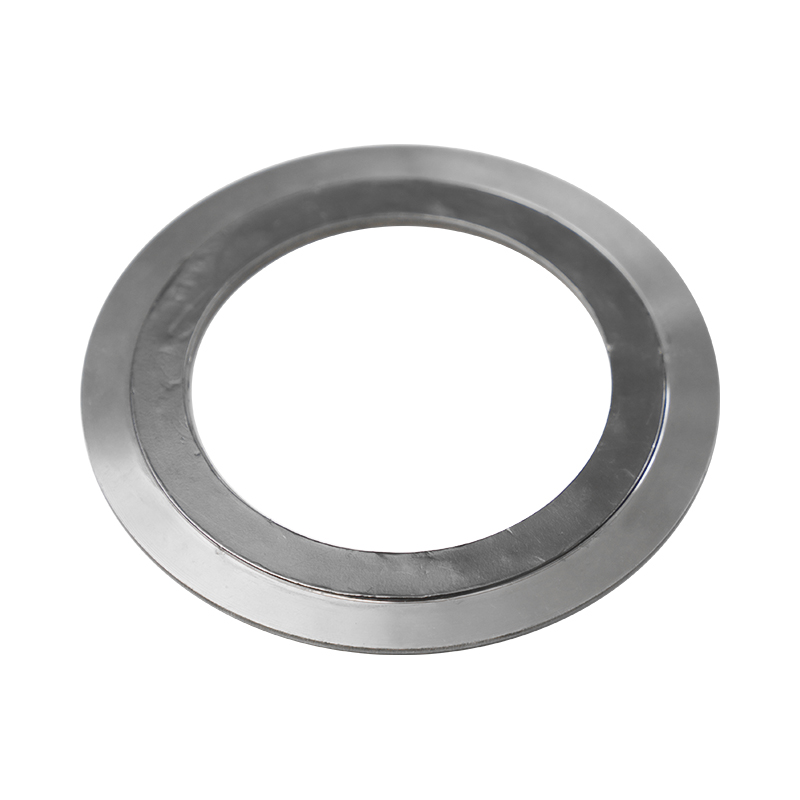
The primary engineering advantage of a corrugated graphite gasket lies in its "spring-like" metal core. Unlike the V-shaped metallic windings of an SWG, which can suffer from "inward buckling" under excessive bolt loads or thermal expansion, the corrugated metal core for graphite gaskets provides a consistent restorative force. When the flange expands and contracts, the resilience of corrugated gaskets in thermal cycling allows the graphite layers to maintain constant contact stress against the flange faces.
Jiangsu Jintai Sealing Technology Co., Ltd., founded in 2004 and located in the Taixing Sealing Technology Industrial Park, utilizes advanced manufacturing processes to ensure the pitch and depth of the corrugations are optimized for maximum recovery. Under the high-end brand Nofstein, the company produces corrugated graphite gasket units that meet CCS classification society standards, ensuring high-temperature gasket recovery rates that outperform standard composite seals in successive power and shipping cycles.
| Performance Metric | Spiral Wound Gasket (SWG) | Corrugated Graphite Gasket |
| Seating Stress (Min) | High (Requires heavy bolting) | Moderate (Lower torque needed) |
| Recovery (ASTM F36) | 15% - 25% | 30% - 40% |
| Resistance to Buckling | Susceptible | Inherent (Structural core) |
Graphite Oxidation and Thermal Stability at 450C
Flexible graphite is valued for its chemical inertness, but preventing graphite oxidation in gaskets is critical at temperatures exceeding 450 Celsius. The corrugated design effectively "encapsulates" the graphite within the valleys of the metal substrate, reducing the surface area exposed to oxidizing atmospheres. When analyzing corrugated graphite gasket vs spiral wound gasket durability, the SWG's exposed windings can sometimes lead to "wicking" of the media, whereas the corrugated gasket face-to-face seal creates multiple concentric barriers.
- Material Purity: Utilizing nuclear-grade graphite with low sulfur and chloride content to prevent galvanic corrosion in stainless steel gaskets.
- Thermal Conductivity: The metallic core facilitates rapid heat dissipation, reducing localized hot spots that lead to thermal degradation of sealing materials.
- Emission Control: Meeting the Fugitive Emission Standards for industrial gaskets (such as TA-Luft) through superior micro-sealing of the graphite layers.
Sealing Reliability in High-Pressure Steam Systems
For industries such as power generation and iron and steel, corrugated gaskets for steam applications must handle sudden pressure surges. The tensile strength of corrugated metal gaskets combined with the conformability of Nofstein's specialized rubber and asbestos-free materials allows for a robust seal even on slightly warped flange surfaces. Having cooperated with global brands like Garlock and Flexitallic, Jiangsu Jintai Sealing Technology Co., Ltd. has refined the corrugated gasket compression set to ensure long-term tightness in pneumatic and hydraulic systems.
Load Bearing and Flange Stress Distribution
A significant benefit of corrugated graphite gaskets is their ability to achieve a tight seal at lower bolt loads compared to spiral wound types. High-tension bolting in thermal cycling can lead to flange rotation and gasket crushing. The corrugated gasket stress distribution is more uniform, protecting sensitive flange faces from Ra surface finish damage. This is particularly vital in the chemical and machinery sectors where equipment longevity is a primary KPI.
| Engineering Factor | Standard Requirement | Nofstein Technical Achievement |
| Leakage Rate | Less than 10-4 mg/(s·m) | Compliant with CiT environmental tests |
| Operating Temp | -200C to +650C | Stable via high-purity graphite lamination |
| Operating Pressure | Up to 25 MPa (250 Bar) | Structural core prevents blowout |
Why choose corrugated gaskets for heat exchangers?
Heat exchangers are notorious for differential thermal expansion in gaskets. The radial shear resistance of corrugated gaskets allows the seal to accommodate the sliding movement of the flange faces without tearing the graphite surface. By leveraging the Nofstein sealing technology innovation, Jiangsu Jintai Sealing Technology Co., Ltd. provides specialized insulation materials and environment-friendly seals that have passed the Chinese Academy of Coal Sciences and national nonmetal tests, ensuring reliability for major projects in Eastern Europe, Southeast Asia, and beyond.
FAQ
Can corrugated graphite gaskets be reused?
In general, industrial seals should be replaced whenever a flange is opened. While the corrugated core is durable, the graphite layer deforms to fill flange irregularities, and a new gasket is required to ensure a gas-tight seal upon reassembly.
What is the maximum temperature for a corrugated graphite gasket?
In oxidizing atmospheres, the limit is typically 450°C to 500°C. In non-oxidizing or inert environments, the flexible graphite can withstand temperatures up to 2500°C, though the metal core (e.g., 316L SS) will be the limiting factor.
Do corrugated gaskets require a specific flange finish?
They are quite versatile; however, a phonographic or concentric serrated finish (Ra 3.2 to 6.3 micrometers) is ideal for mechanical "keying" of the graphite into the flange surface.
Are these gaskets suitable for highly corrosive chemicals?
Yes, provided the metal core is matched to the chemical media (e.g., Monel, Inconel, or Hastelloy). The graphite itself is resistant to most chemicals except for strong oxidizing acids.
What prevents the graphite from blowing out under high pressure?
The corrugations in the metal core act as a mechanical anchor for the graphite. Under bolt load, the graphite is compressed into the valleys, creating a high-friction bond that resists internal pressure blowouts.
Technical References
- ASME B16.21: Nonmetallic Flat Gaskets for Pipe Flanges.
- ASTM F37: Standard Test Methods for Sealability of Gasket Materials.
- EN 13555: Flanges and their joints - Gasket parameters and test procedures relevant to the design rules for gasketed circular flange connections.

 Home
Home +86 152 4020 4398
 zdjt004@jsjtmf.vip
 No.2 Xingyuan East Road, Yuanzhu Town Industrial Park, Taixing City, Jiangsu Province, China
Copyright © 2024. Jiangsu Jintai Sealing Technology Co., Ltd. All rights reserved. Custom Sealing Gaskets, Sealing Packing, Rubber Products
