


 Eng
Eng 
 русский

Corrugated Graphite Gasket for High-Temperature Sealing Applications
 2026.06.25
 Industry News
Article Directory
- 1 Corrugated Graphite Gasket Temperature Resistance: Performance Across the Full Thermal Envelope
- 2 Corrugated Graphite Gasket Sealing Performance: Contact Stress, Conformability, and Leak Integrity
- 3 Corrugated Graphite Gasket Chemical Resistance: Media Compatibility Across Process Industries
- 4 Corrugated Graphite Gasket for Flange Connections: Dimensional Standards and Specification
- 5 Corrugated Graphite Gasket Pressure Capability: Load Distribution and Pressure Class Limits
- 6 Corrugated Graphite Gasket vs Spiral Wound Gasket: Engineering Selection Guide
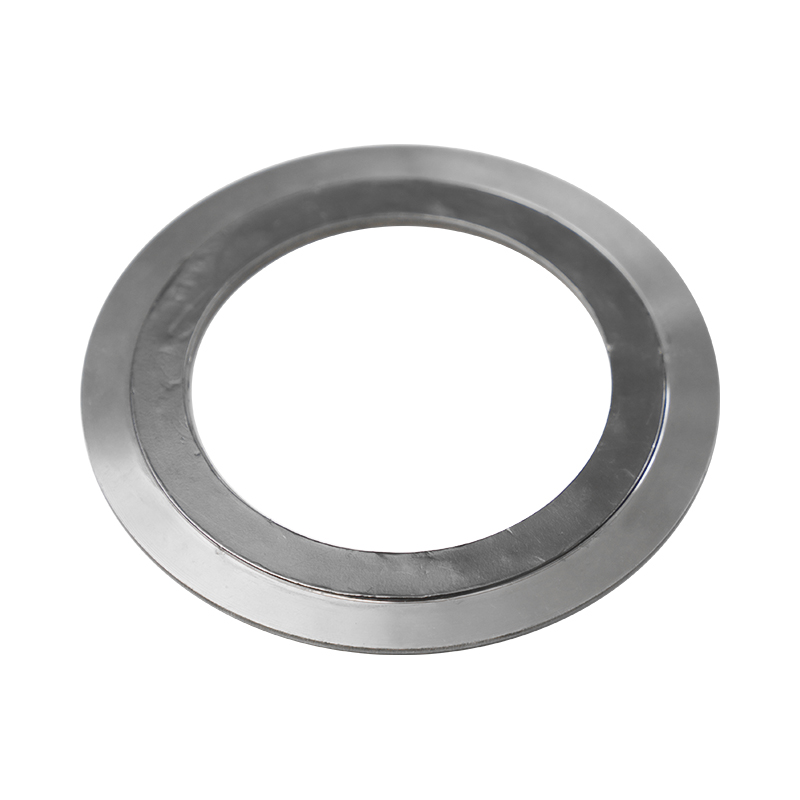
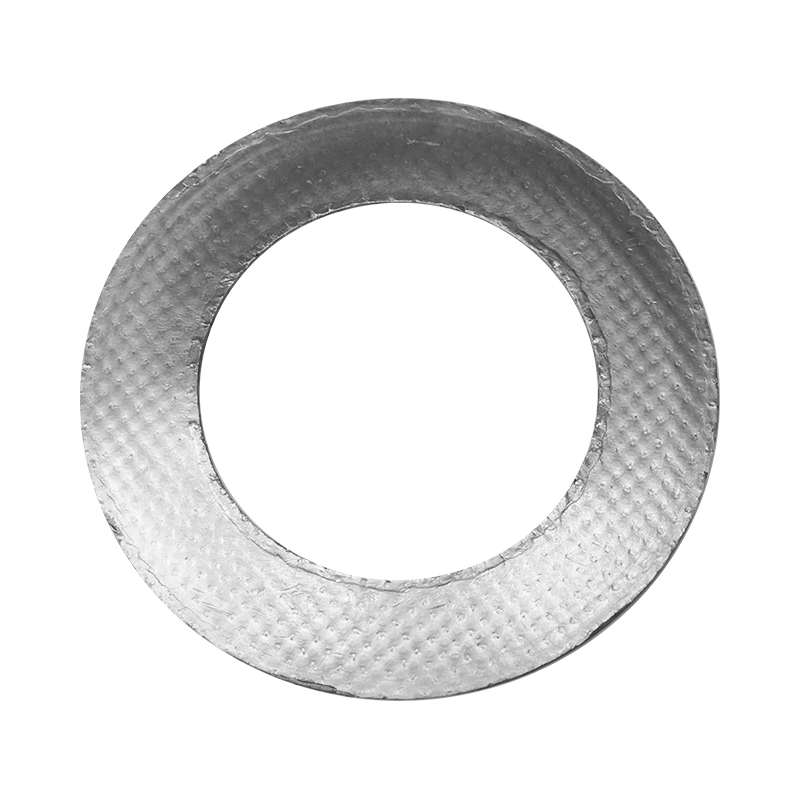
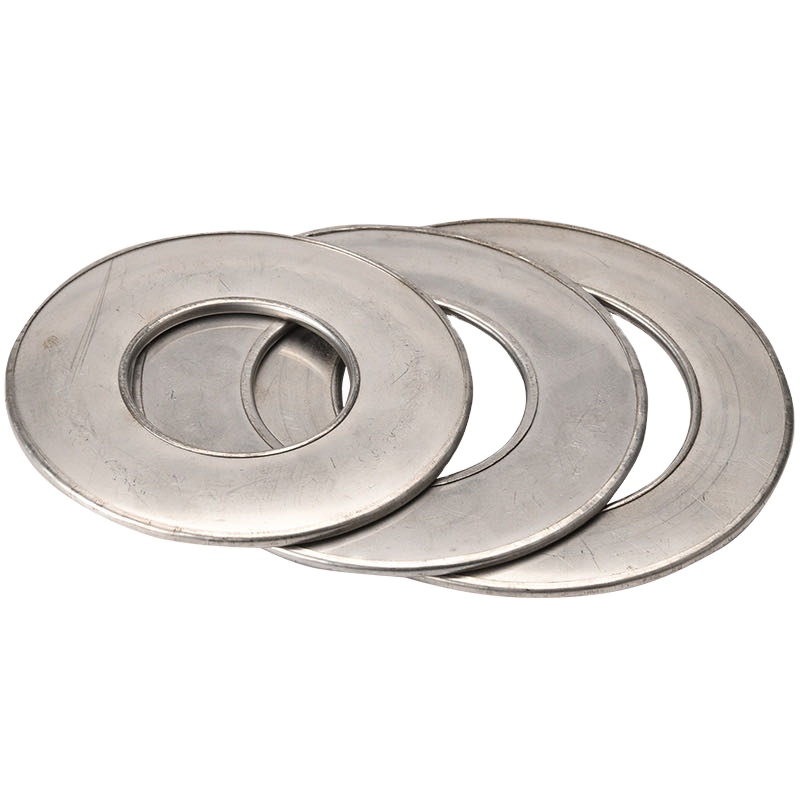
When sealing engineers evaluate gasket options for high-temperature, high-pressure flange connections, corrugated graphite gasket constructions occupy a distinct performance tier: metallic structural rigidity combined with the chemical inertness and thermal resilience of expanded graphite fill. The corrugated metal core — typically 304 stainless steel, 316L, or carbon steel — provides the mechanical load path under bolt stress, while the graphite layers conform to flange surface irregularities and create the actual seal. No adhesive, no binder, no organic compound that degrades at temperature.
-200°C
→
+650°C
Operating temperature range (graphite fill, inert atmosphere)
PN 400
/
Class 2500
Maximum pressure class — standard corrugated graphite grades
98%
Carbon
Graphite purity in premium sealing-grade expanded graphite
EN 1514-8
/
ASME B16.20
Key dimensional and performance standards
Corrugated Graphite Gasket Temperature Resistance: Performance Across the Full Thermal Envelope
Corrugated graphite gasket temperature resistance is governed by the graphite fill rather than the metal core. Expanded graphite is thermally stable from cryogenic service (-200°C) through to 650°C in oxidizing environments and up to 3,000°C in inert or reducing atmospheres — a range no elastomeric or PTFE gasket material approaches.
-200°C to 0°C
Cryogenic
LNG, liquid nitrogen, cryogenic process lines. Graphite remains flexible; metal core retains structural integrity where elastomers embrittle.
0°C to 300°C
Standard Service
Steam, hot water, process piping. Full sealing performance across the most common industrial process temperature range.
300°C to 650°C
High Temperature
Superheated steam, thermal oil, hot gas lines. Oxidizing atmosphere limits — consult supplier for oxidizing service above 450°C.
650°C+
Extreme / Inert Only
Furnace and reactor applications in hydrogen, nitrogen or vacuum service. Requires 99%+ graphite purity and metallic pass-through inhibitor coatings.
Thermal cycling performance is where corrugated graphite constructions outperform compressed fiber sheet gaskets. The graphite fill's near-zero thermal expansion coefficient (1–2 × 10⁻⁶/°C) relative to steel (12 × 10⁻⁶/°C) means that under repeated heat-up and cool-down cycles, the graphite layer does not extrude or relax at the sealing interface as organic-fill gaskets do. This translates directly into lower re-torque frequency on flanges in thermal cycling service.
Corrugated Graphite Gasket Sealing Performance: Contact Stress, Conformability, and Leak Integrity
Corrugated graphite gasket sealing performance depends on two simultaneous mechanisms: the corrugated metal core concentrating bolt load onto discrete sealing ridges, and the graphite surface layer conforming to micro-irregularities in the flange face under that concentrated stress. Together they achieve leak-tightness at seating stresses 30–50% lower than spiral wound gaskets require — reducing the bolt load needed to seal and lowering the risk of flange rotation and leakage on lower-rated flanges.
Minimum Seating Stress (m)
Typically 20–30 MPa for corrugated graphite grades — versus 55–70 MPa for spiral wound. Allows effective sealing on Class 150 and PN16 flanges where bolt load budget is limited.
Gasket Factor (y)
Initial seating stress requirement: 25–45 MPa depending on corrugation geometry and graphite density. ASME PCC-1 Appendix O torque calculations apply directly using published m and y values.
Surface Finish Tolerance
Effective on Ra 3.2–12.5 µm flange face finish (125–500 AARH). Graphite fill accommodates tooling marks and minor surface corrosion that would cause spiral wound or ring joint gaskets to leak.
Blowout Resistance
The metallic core prevents the sudden extrusion failure mode that can occur with full-face soft gaskets under pressure surge. The corrugations act as a mechanical stop, limiting graphite displacement even at above-design pressure events.
Corrugated Graphite Gasket Chemical Resistance: Media Compatibility Across Process Industries
Corrugated graphite gasket chemical resistance is one of its most commercially significant properties. Expanded graphite is non-reactive with the vast majority of process chemicals encountered in refining, petrochemical, power generation, and chemical processing — including strong acids, alkalis, and hydrocarbons that would degrade PTFE-envelope or rubber-filled alternatives.
| Media Category | Compatibility | Temperature Limit | Notes |
| Steam (saturated & superheated) | Excellent | 650°C | Primary application — benchmark service |
| Hydrocarbons (oil, fuel, gas) | Excellent | 500°C | Suitable for refinery and pipeline service |
| Sulfuric Acid (<98%) | Good | 200°C | Verify metal core grade — SS316L preferred |
| Hydrochloric Acid | Moderate | 120°C | Concentration-dependent; Hastelloy C core for dilute HCl |
| Caustic (NaOH, KOH) | Good | 300°C | Standard grades acceptable below 30% concentration |
| Nitric Acid (oxidizing) | Limited | — | Oxidizing acids attack graphite carbon matrix — not recommended |
| Chlorine / Halogens | Limited | — | Graphite oxidation risk in wet halogen service — consult engineer |
| Cryogenic fluids (LN₂, LNG) | Excellent | -200°C min | No embrittlement — graphite maintains seal at cryogenic temperatures |
The two chemical families requiring caution are strongly oxidizing acids (nitric, chromic, perchloric) and wet halogens (wet chlorine, bromine). In these services, graphite's carbon structure is subject to progressive oxidative attack. For such media, PTFE-filled corrugated metal gaskets or solid metal ring joints are the appropriate alternative.
Corrugated Graphite Gasket for Flange Connections: Dimensional Standards and Specification
Corrugated graphite gasket for flange connections are manufactured to EN 1514-8 (metric, European flanges) and ASME B16.20 equivalent dimensions for ANSI/ASME flange systems. The gasket is positioned in the raised-face bore and sits within the flange bore and bolt-circle geometry — no special machining or non-standard facing is required, unlike ring-type joints.
Raised Face (RF)
The primary application. Corrugated graphite seals flat and raised face flanges from PN16 to PN400 (Class 150 to Class 2500). No machined groove required — drop-in replacement for compressed sheet gaskets on existing flanges.
Full Face (FF)
Available for cast iron and non-metallic flange systems where full-face bolt loading is needed to prevent flange cracking. Graphite fill prevents over-compression of the gasket face under full-face bolt pattern.
Tongue & Groove / Male-Female
Corrugated graphite can be precision-manufactured to confined face geometries. The graphite layer fills the annular groove to create a hydraulic barrier without requiring a separate inner ring retainer.
Standard thickness is 1.5–3.0 mm (compressed). Thicker sections (up to 4.5 mm) are available for flanges with surface damage, high roughness, or waviness exceeding standard EN 1092-1 tolerance. Core material selection follows media and temperature: 304 SS for most services, 316L for chloride-containing environments, 321 for high-temperature oxidizing service, and Inconel 625 for extreme temperature-corrosion combinations.
Corrugated Graphite Gasket Pressure Capability: Load Distribution and Pressure Class Limits
Corrugated graphite gasket pressure capability is a function of both the corrugated metal core's mechanical strength and the graphite fill's resistance to extrusion under sustained hydrostatic end force. At Class 900 and above (PN 150+), the corrugation geometry is critical — tighter pitch corrugations distribute load more evenly across the sealing face and reduce the risk of graphite creep-relaxation over extended service periods.
| Pressure Class | PN Equivalent | Max Pressure (bar) | Typical Temperature Limit | Recommended Core |
| Class 150 | PN 20 | 19.6 bar @ 38°C | 538°C | 304 SS |
| Class 300 | PN 50 | 51.1 bar @ 38°C | 538°C | 304 / 316L SS |
| Class 600 | PN 100 | 102.1 bar @ 38°C | 565°C | 316L SS |
| Class 900 | PN 150 | 153.2 bar @ 38°C | 565°C | 316L / 321 SS |
| Class 1500 | PN 250 | 255.3 bar @ 38°C | 600°C | 321 / Inconel |
| Class 2500 | PN 420 | 425.5 bar @ 38°C | 650°C | Inconel 625 |
Pressure ratings in the table follow ASME B16.5 material group 1.1 at 38°C. Actual de-rated values apply at elevated temperatures — always cross-reference with ASME B16.5 pressure-temperature tables for the specific material group. For combined high-temperature and high-pressure service (above Class 900 and above 450°C simultaneously), specifying a graphite inhibitor coating on the core is strongly recommended to prevent galvanic interaction between graphite and carbon steel at elevated temperatures.
Corrugated Graphite Gasket vs Spiral Wound Gasket: Engineering Selection Guide
The corrugated graphite gasket vs spiral wound gasket selection question is one of the most common in industrial flange engineering. Both are semi-metallic constructions suitable for high-temperature, high-pressure service — but they have meaningfully different installation requirements, failure modes, and performance profiles that make each superior in specific contexts.
| Selection Criterion | Corrugated Graphite Gasket | Spiral Wound Gasket |
| Minimum seating stress | 20–30 MPa — low bolt load requirement | 55–70 MPa — requires higher bolt preload |
| Flange surface finish | Tolerant — Ra 3.2–12.5 µm acceptable | Demanding — Ra 3.2–6.3 µm required (ASME B16.20) |
| Flange rating suitability | Class 150 to Class 2500 | Most effective Class 300 and above |
| Thermal cycling performance | Excellent — graphite near-zero thermal expansion | Good — but winding relaxation risk on repeated cycling |
| Installation sensitivity | Low — centering on bolt circle, torque to spec | High — inner/outer ring required, over-torque risk |
| Reuse after disassembly | Not recommended — replace after each opening | Not recommended — same rule applies |
| Chemical service breadth | Wide — limited by metal core grade | Wide — limited by filler material (PTFE, graphite, mica) |
| Fire-safe performance | Excellent — graphite is non-combustible | Depends on filler — graphite-filled versions are fire-safe |
| Cost (material) | Lower to equivalent | Equivalent to higher (inner/outer ring cost) |
Specify Corrugated Graphite When
- Flanges are Class 150–300 with limited bolt load budget
- Flange faces have surface damage or non-ideal finish
- Thermal cycling service with frequent heat-up/cool-down
- Drop-in replacement for sheet gaskets without re-machining
- Fire-safe sealing is specified by process safety requirements
Specify Spiral Wound When
- Class 600+ with consistent, well-maintained flange faces
- Very high bolt loads are available and controlled torquing is standard practice
- Non-graphite filler is needed (mica for very high-temperature oxidizing service)
- Existing piping specification already standardized on spiral wound
- Confined raised-face geometry with precision-machined inner ring bore

 Home
Home +86 152 4020 4398
 zdjt004@jsjtmf.vip
 No.2 Xingyuan East Road, Yuanzhu Town Industrial Park, Taixing City, Jiangsu Province, China
Copyright © 2024. Jiangsu Jintai Sealing Technology Co., Ltd. All rights reserved. Custom Sealing Gaskets, Sealing Packing, Rubber Products
