In hydrocarbon processing, power generation, and chemical manufacturing, the smallest component in a pipeline system carries some of the largest consequences — a leaking flange costs more in unplanned downtime, safety incidents, and emissions compliance penalties than any other single failure mode. The corrugated metal seal was engineered to eliminate that risk, delivering reliable sealing under conditions that destroy elastomeric and composite gaskets: sustained temperatures above 500 C, pressures exceeding 400 bar, and media corrosive enough to attack stainless steel.
-200 to 1000 C
Temperature Range
Up to 420 bar
Pressure Rating
01Industrial Applications of the Corrugated Metal Seal
A corrugated metal seal is used wherever elastomeric and fiber-composite gaskets fail to deliver long-term sealing integrity: petrochemical reactor flanges, steam turbine casings, heat exchanger tube sheets, cryogenic pipeline joints, and nuclear plant primary circuit connections. Its all-metal construction eliminates creep relaxation and chemical degradation — the two mechanisms responsible for most flange leakage in demanding process environments.
Key application sectors for the corrugated metal seal include oil refinery and gas processing, offshore platform pipeline systems, thermal and nuclear power stations, pharmaceutical and biotechnology clean process lines, and aerospace test bench fluid systems where helium leak rates below 0.01 mg/s per meter are contractually specified.
Engineering Definition
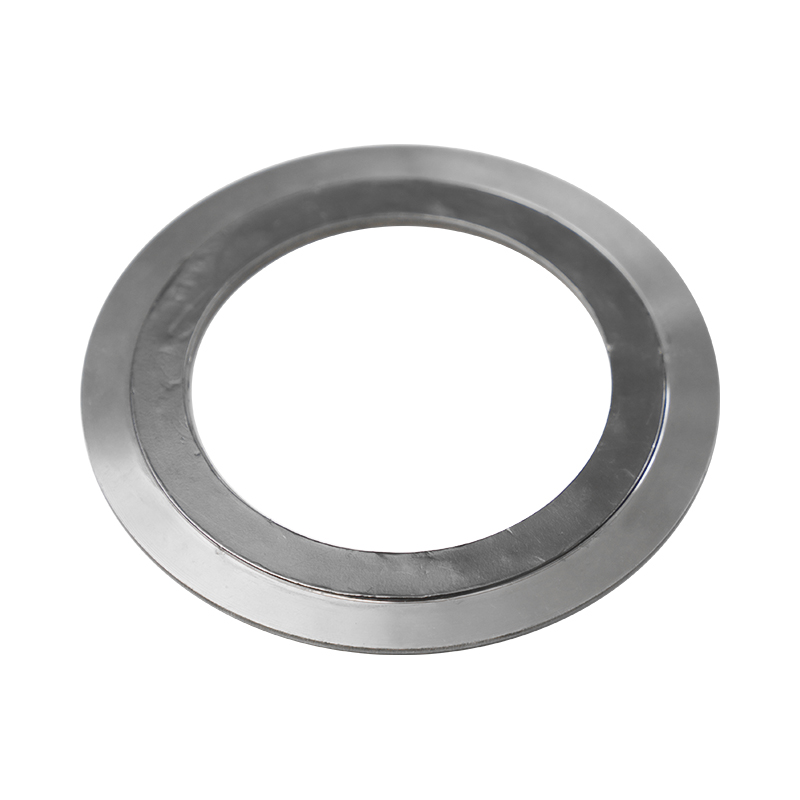
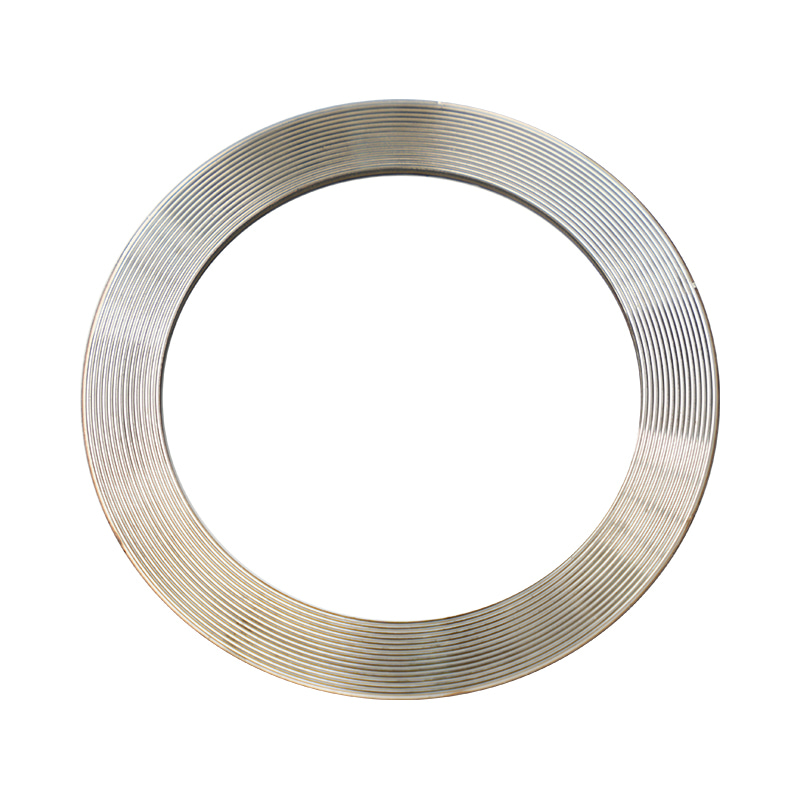
A corrugated metal seal is a precision-formed metallic gasket featuring a series of concentric wave-form corrugations that act as independent spring-loaded sealing lines, generating localized contact stress at each corrugation crest that maintains a fluid-tight joint across thermal cycling, bolt relaxation, and pressure fluctuation without plastic collapse of the sealing element.
02High Temperature and High Pressure Sealing Mechanism
The sealing performance of a corrugated metal seal derives from elastic springback — not material softness. When flange bolts are tightened, the corrugation crests deflect elastically, generating high contact stress (typically 200 to 600 MPa at each crest line) that physically deforms the sealing surface asperities and creates a hermetic metal-to-metal contact zone.
This elastic mechanism remains functional under thermal cycling because the corrugations continue to exert spring force as flange faces expand and contract. Studies on bolted flange assemblies in steam service at 540 C confirm that corrugated metal gaskets maintain sealing integrity through 500 thermal cycles without measurable increase in leak rate, a performance benchmark that fiber and spiral wound gaskets fail to reach beyond 50 to 100 cycles.
- Multiple independent sealing lines (4 to 12 per gasket) provide redundancy — one damaged crest does not compromise the joint
- Spring-loaded contact force self-compensates for bolt load relaxation caused by flange creep and thermal expansion differentials
- No organic binder or filler materials means zero outgassing, zero charring, and no cold-flow at sustained high temperature
- Surface coating options (silver, PTFE, graphite) adapt the base metal corrugation to specific media and flange surface finish requirements
03Materials Used in Corrugated Metal Seals for Industrial Environments
Material selection for a corrugated metal seal is governed by three parameters: operating temperature ceiling, media chemical compatibility, and the hardness relationship between gasket and flange face. The gasket must be softer than the flange material to embed without scoring, yet hard enough to resist blowout at maximum operating pressure.
| Material |
Temp Limit |
Key Resistance |
Typical Application |
| Soft Iron (Low Carbon Steel) |
450 C |
Steam, neutral water |
General pipeline, utility steam |
| 304 / 316L Stainless Steel |
600 C |
Oxidizing acids, chlorides (316L) |
Chemical plant, pharmaceutical |
| Inconel 625 / 718 |
980 C |
High-temperature oxidation, H2S |
Gas turbine, refinery reactor |
| Hastelloy C-276 |
760 C |
Reducing acids, wet chlorine |
Chlor-alkali, flue gas desulfurization |
| Titanium Grade 2 |
315 C |
Seawater, oxidizing chloride media |
Offshore, desalination |
| Monel 400 |
480 C |
Hydrofluoric acid, marine environments |
HF alkylation units, naval systems |
04Can Corrugated Metal Seals Be Reused in Flange Applications
Reusability depends on whether the corrugation crests have exceeded their elastic deflection limit during initial installation. A corrugated metal seal that was correctly torqued to the manufacturer's specified bolt load — compressing corrugations to no more than 25 to 40% of their free height — retains sufficient springback for one additional service cycle after removal, provided the seating surface coating is intact and no pitting or corrosion is present on the crest lines.
Safe to Reuse When
- Crest height reduction is less than 30% of original
- No visible cracks, pitting, or corrosion on sealing surfaces
- Surface coating (silver, PTFE) is greater than 70% intact
- Service was below 60% of maximum rated temperature
- Joint was not subjected to fire or emergency overpressure
Replace Immediately When
- Corrugation crests show plastic set or flat zones
- Operating temperature exceeded rated maximum
- Media was highly corrosive or hydrogen-service rated
- Joint experienced a leak event or blowout
- Storage exceeded 2 years or coating is degraded
05How to Choose the Right Corrugated Metal Seal for Pipeline and Flange Systems
Correct specification of a corrugated metal seal requires matching six engineering parameters to the flange system's operating and mechanical conditions. Undersizing any one parameter creates the conditions for premature seal failure regardless of installation quality.
- Nominal pipe size and flange standard: ASME B16.20, EN 1514-6, or JIS B 2404 dimensional standards govern OD, ID, and bolt hole pattern. Always specify by standard, not just diameter.
- Pressure class: ASME Class 150 through Class 2500 determines the required minimum seating stress. Higher pressure classes demand finer corrugation pitch and harder base material.
- Design temperature: Select base metal with a temperature ceiling at least 50 C above the maximum process temperature to maintain safety margin during upset conditions.
- Media chemistry: Cross-reference media against the material compatibility matrix for the base metal and the surface coating. Chloride-containing media require Hastelloy or titanium rather than standard austenitic stainless steel.
- Flange surface finish: Smooth finish flanges (Ra 0.8–3.2 um) pair with silver-coated or bare metal corrugated seals. Raised-face or RTJ flanges require matched geometry — do not substitute flat-face gaskets on raised-face flanges.
- Available bolt load: Calculate the actual achievable bolt stress at the target torque. If bolt load is insufficient to achieve minimum seating stress, specify a softer base material or wider corrugation pitch to reduce required assembly load.
06Corrugated Metal Seal vs Spiral Wound Gasket: Key Differences
The corrugated metal seal and the spiral wound gasket are both metallic sealing solutions for high-pressure flanged joints, but they differ fundamentally in construction, sealing mechanism, and optimal application range.
Corrugated Metal Seal
- Single-piece solid or jacketed metal construction
- Seals by elastic spring force at corrugation crests
- No filler material — zero blowout risk at high temperature
- Reusable under controlled conditions
- Performs in cryogenic service down to -200 C
- Preferred for hydrogen, helium, and toxic media service
- Narrow flange face contact area minimizes bolt load requirement
Spiral Wound Gasket
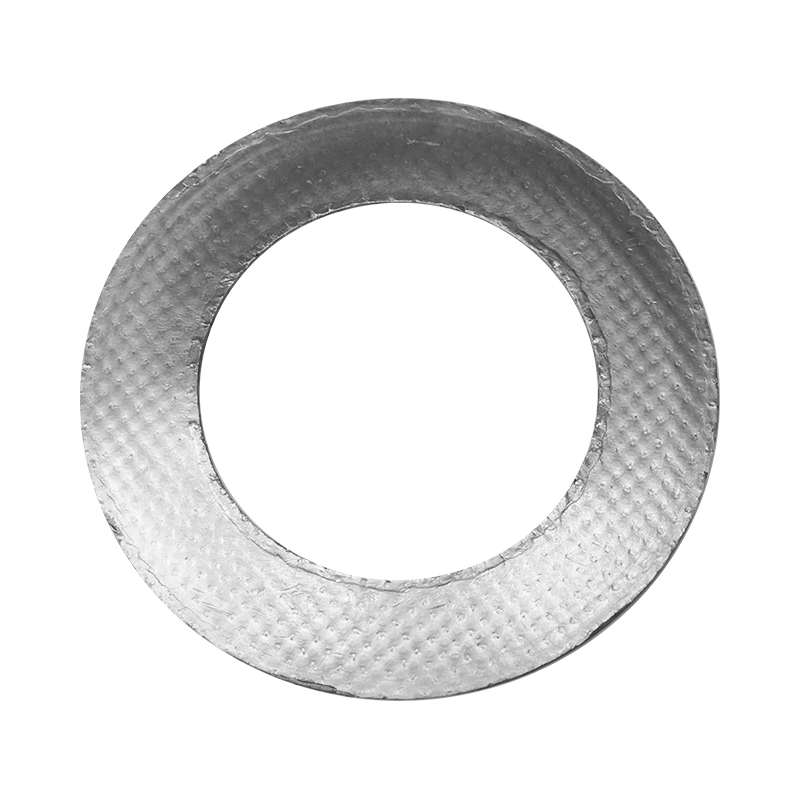
- Alternating metal strip and filler (graphite or PTFE) construction
- Seals by compression of filler material between metal winds
- Filler can char, creep, or blow out above 450 C continuous
- Single use — compression of filler is not reversible
- Wider usable temperature range for standard service (up to 850 C with mica filler)
- Better suited for irregular or damaged flange faces
- Lower per-unit cost at standard pressure classes
Frequently Asked Questions About Corrugated Metal Seals
What bolt torque is required for a corrugated metal seal installation?
Required bolt torque varies with gasket size, material hardness, and flange class. As a general guide, a DN 50 Class 300 corrugated metal seal in 316 stainless steel requires approximately 80 to 120 Nm per bolt using lubricated M16 stud bolts to achieve the target seating stress of 200 to 350 MPa at the corrugation crests. Manufacturer torque tables calibrated to the specific gasket geometry and bolt grade must always be used — generic flange torque charts are not sufficient for metal gasket applications.
Are corrugated metal seals suitable for hydrogen service?
Yes. The all-metal construction of the corrugated metal seal makes it one of the preferred gasket types for high-pressure hydrogen service (as specified in ASME PCC-1 and API 660). The absence of organic fillers eliminates hydrogen permeation through filler materials — a known failure mode of spiral wound gaskets in hydrogen above 200 bar. Inconel 718 or 316L stainless steel base material is specified for hydrogen embrittlement resistance in sustained high-pressure service.
Can corrugated metal seals be used on raised face (RF) flanges?
Yes. The corrugated metal seal is dimensioned to seat on the raised face contact area of ASME B16.5 and B16.47 flanges, with the gasket OD matching the raised face diameter. Silver or soft-iron coating on the corrugation crests accommodates the 3.2 to 6.3 um surface finish typical of standard RF flanges. Flat-face and ring-type joint (RTJ) flange variants require separate gasket geometry specifications and must not be interchanged with RF designs.
What is the lead time for custom-diameter corrugated metal seals?
Standard sizes from DN 15 to DN 600 in common materials are typically available from stock or with 5 to 10 business day production lead time. Custom large-bore corrugated metal seal dimensions above DN 600, non-standard alloys such as Hastelloy C-22 or titanium Grade 5, or special coatings require 3 to 6 weeks for production. Emergency fabrication programs can compress this to 10 to 15 days for critical plant shutdown applications with advance notice.



 Eng
Eng 
 русский

 2026.06.18
 Industry News

 Home
Home +86 152 4020 4398
 zdjt004@jsjtmf.vip
 No.2 Xingyuan East Road, Yuanzhu Town Industrial Park, Taixing City, Jiangsu Province, China
