


 Eng
Eng 
 русский
 Home / News / Industry News / Engineering Protocols for Bolt Torque Sequencing in Metal Gasket Ring Flange Assemblies
 Engineering Protocols for Bolt Torque Sequencing in Metal Gasket Ring Flange Assemblies
 2026.04.07
 Industry News
Article Directory
Jiangsu Jintai Sealing Technology Co., Ltd., founded in 2004 and headquartered in the Yuanzhu Industrial Park, Taixing, operates as a comprehensive sealing technology enterprise specializing in R&D and high-precision manufacturing. Under the high-end brand Nofstein, our facility produces advanced sealing solutions for pneumatic, hydraulic, and thermal systems, serving critical sectors including shipping, power generation, and chemical processing. With a quality system identified by the CCS classification society and a production history involving collaboration with global technical standards, we emphasize the importance of mechanical precision during assembly. For high-pressure applications, the metal gasket ring requires a strictly controlled installation procedure to ensure the elastic and plastic deformation necessary for a zero-leakage interface.
Mechanical Stress Distribution and Flange Alignment Standards
The primary objective of a metal gasket ring installation is to achieve uniform compression across the entire sealing surface. Before applying torque, technicians must verify the flange face parallelism and alignment according to ASME PCC-1 standards. Any angular or lateral misalignment will result in uneven loading, leading to localized "crushing" of the gasket or insufficient seating stress on the opposite side. Utilizing a lubricated bolt torque calculation is essential; friction coefficients (K-factor) must be accounted for to ensure that the actual bolt tension corresponds to the target compressive load on the metal gasket ring. Failure to align the flange faces often results in a leaking metal gasket ring assembly, regardless of the torque values applied later.
The Star Pattern Sequence for Uniform Seating Stress
To prevent flange rotation and ensure the gasket is seated evenly, a star pattern bolt torque sequence must be followed. This cross-pattern methodology distributes the load symmetrically, preventing the gasket from shifting or buckling. For a standard 8-bolt flange, the sequence follows a 1-5-3-7-2-6-4-8 order. When evaluating how to install a metal gasket ring, the process must be executed in incremental stages: 30 percent, 60 percent, and finally 100 percent of the target torque. This incremental torquing for metal gaskets prevents the uneven "cocking" of the flange, which is the best way to prevent gasket blowouts in high-pressure steam or chemical pipelines.
Material Hardness and Surface Finish Compatibility
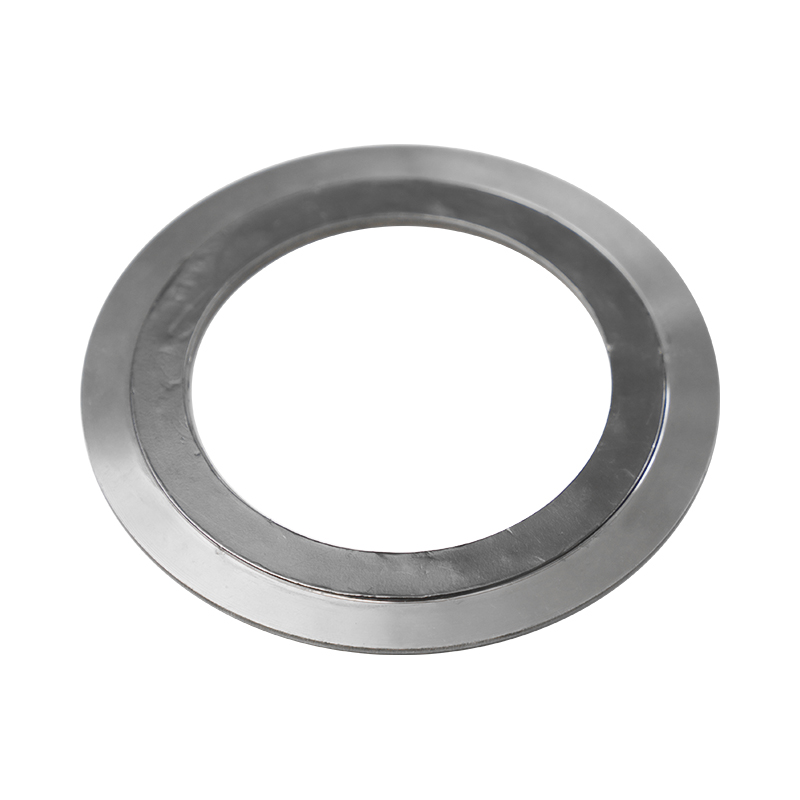
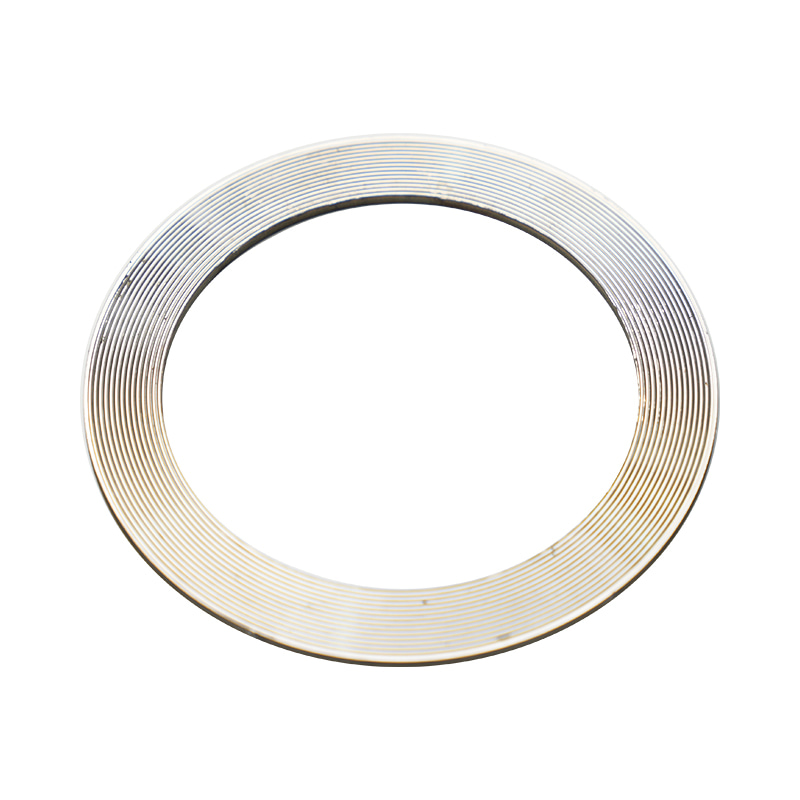
The sealing mechanism of a metal gasket ring relies on the gasket material being softer than the flange material. At Jiangsu Jintai Sealing Technology Co., Ltd., we calibrate the hardness of metal gasket rings to ensure they flow into the microscopic serrations of the flange face. The Ra surface finish for metal gaskets typically ranges from 1.6 um to 3.2 um (63 to 125 micro-inches) for spiral wound or RTJ (Ring Type Joint) configurations. When comparing a metal gasket ring vs soft gasket torque, the metal variant requires significantly higher seating stress to initiate the seal. Using stainless steel gasket rings in high-temperature environments also necessitates a consideration of thermal expansion coefficients to maintain the seal during heat-up cycles.
Post-Installation Inspection and Re-Torquing Protocols
Once the 100 percent torque stage is completed, a final "circular pass" at the target torque is required to ensure all bolts are uniform. Why you must re-torque metal gaskets after the first thermal cycle is a common technical inquiry; it is due to the phenomenon of "creep-relaxation" in the bolt-gasket-flange system. For high-pressure metal gasket ring applications, checking the bolt stretch using ultrasonic measurement or feeler gauges on the flange gap is recommended to verify that the minimum seating stress for metal gaskets has been achieved. This rigorous validation process is what separates a temporary fix from an industrial zero-leakage sealing solution.
Comparative Analysis of Gasket Seating Requirements
The following table outlines the mechanical differences in torque requirements based on gasket material and construction, assuming a standard Class 300 flange.
| Gasket Construction | Required Seating Stress (y) | Gasket Factor (m) | Typical Surface Finish (Ra) |
| Non-Asbestos Fiber | 2500 psi | 2.00 | 3.2 - 6.3 um |
| Spiral Wound (SS316) | 10,000 psi | 3.00 | 3.2 - 6.3 um |
| Solid Metal Ring (RTJ) | 18,000 psi | 5.50 | 0.8 - 1.6 um |
| Kammprofile Gasket | 8,500 psi | 4.00 | 3.2 - 6.3 um |
Engineering Standards for Sealing Reliability
Jiangsu Jintai Sealing Technology Co., Ltd. continues to carry out technological innovation to adapt to the evolving needs of the global machinery and shipping industries. Our professional foreign trade group and sophisticated quality control enable us to guarantee total customer satisfaction across major international projects. By integrating advanced sealing materials and designs, such as asbestos-free gaskets and specialized rubber parts, we provide the durability required for pneumatic and hydraulic excellence. Adhering to the correct bolt torque sequence for metal gaskets is the final, critical step in the chain of sealing integrity, ensuring the safety and efficiency of high-stakes industrial operations.
Hardcore Technical FAQ
Q1: What is the risk of over-torquing a metal gasket ring?
A1: Over-torquing can lead to the "crushing" of the gasket's structural elements (e.g., the V-shape in spiral wound gaskets), causing them to lose their spring-back capability and fail during thermal cycling.
Q2: Is bolt lubrication mandatory for metal gasket installation?
A2: Yes. Without lubrication, up to 50 percent of the torque energy is lost to friction, resulting in insufficient bolt tension and an incomplete seal. Always use a lubricant with a known friction coefficient.
Q3: How does flange rotation affect the metal gasket ring?
A3: Flange rotation occurs when the bolts are tightened and the flange rings "bow" outward. This concentrates the load on the inner edge of the gasket, potentially exceeding its elastic limit and causing a leak.
Q4: Can a metal gasket ring be reused after a flange is opened?
A4: No. Metal gaskets undergo plastic deformation to create a seal. Once compressed, they do not return to their original shape, and reuse significantly increases the risk of a high-pressure blowout.
Q5: What is the significance of the CCS classification society identification?
A5: It verifies that our manufacturing processes and products meet the stringent safety and quality standards required for maritime and offshore applications where sealing failure is not an option.
Technical References
- ASME PCC-1 - Guidelines for Pressure Boundary Flanged Joint Assembly.
- ASME B16.20 - Metallic Gaskets for Pipe Flanges: Ring-Joint, Spiral-Wound, and Jacketed.
- ISO 9001:2015 - Quality management systems manuals for monitoring and experimental manufacture.

 Home
Home +86 152 4020 4398
 zdjt004@jsjtmf.vip
 No.2 Xingyuan East Road, Yuanzhu Town Industrial Park, Taixing City, Jiangsu Province, China
Copyright © 2024. Jiangsu Jintai Sealing Technology Co., Ltd. All rights reserved. Custom Sealing Gaskets, Sealing Packing, Rubber Products
