


 Eng
Eng 
 русский
 Home / News / Industry News / Why Is Carbon Gland Packing Preferred Over PTFE for High-Pressure Valve Stems?
 Why Is Carbon Gland Packing Preferred Over PTFE for High-Pressure Valve Stems?
 2026.03.12
 Industry News
Article Directory
- 1 1. Thermal Stability and Thermal Expansion Management
- 2 2. Resistance to Extrusion and Mechanical Strength
- 3 3. Chemical Compatibility and Sealing Efficiency
- 4 Conclusion: The Engineer's Choice for Reliability
- 4.1 Frequently Asked Questions (FAQ)
- 4.1.1 1. When should I choose carbon gland packing over PTFE?
- 4.1.2 2. Is carbon fiber gland packing mechanical strength enough for abrasive slurries?
- 4.1.3 3. What are the benefits of graphite-impregnated carbon packing?
- 4.1.4 4. How to choose gland packing for high pressure valves in steam service?
- 4.1.5 5. Does carbon gland packing require a break-in period?
- 4.2 Industry References
- 4.1 Frequently Asked Questions (FAQ)
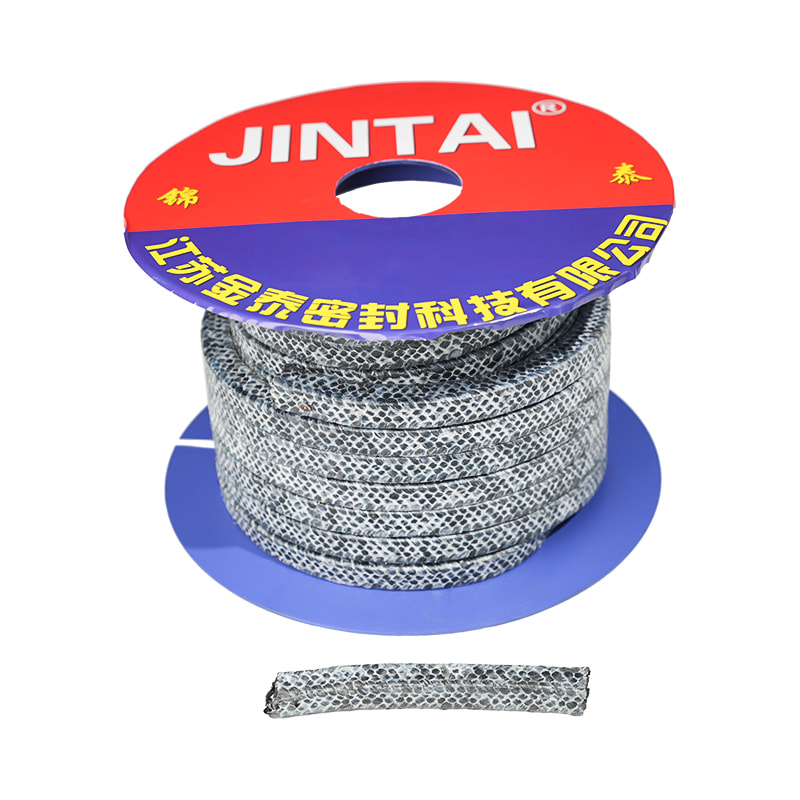
In the demanding environments of power generation, steel manufacturing, and chemical processing, valve stem leakage is more than a maintenance headache—it is a significant safety and efficiency risk. Choosing between carbon gland packing and PTFE-based solutions requires a deep understanding of fluid dynamics and material science under extreme load. Jiangsu Jintai Sealing Technology Co., Ltd., established in 2004 in Taixing, has spent over two decades researching and manufacturing high-end sealing solutions under our premium brand, Nofstein. Our products, which carry CCS classification society identification, are engineered to bridge the gap between standard performance and industrial necessity. This article explores how to choose gland packing for high pressure valves and why carbon gland packing stands as the superior choice for high-pressure, high-temperature stem applications.
1. Thermal Stability and Thermal Expansion Management
The primary failure mode of PTFE in high-pressure steam or chemical service is its high coefficient of thermal expansion and "cold flow" characteristics. Under elevated temperatures, PTFE expands significantly more than the surrounding metal housing, which can lead to excessive stem friction or extrusion. In contrast, the thermal conductivity of carbon gland packing is vastly superior, allowing heat to dissipate away from the valve stem and reducing the risk of localized hardening. When comparing carbon fiber vs graphite gland packing, carbon fiber provides higher structural rigidity, while graphite offers self-lubricating properties. For engineers, carbon gland packing for high temperature steam is the industry standard because it maintains its volume and sealing pressure even when temperatures exceed 400°C, a range where PTFE would simply melt or degrade.
Comparison of Material Thermal Response
- Dimensional Stability: Carbon retains its shape under thermal cycling, whereas PTFE is prone to permanent deformation.
- Heat Dissipation: The carbon gland packing matrix facilitates rapid cooling of the packing box.
| Performance Metric | PTFE Gland Packing | Carbon Gland Packing |
| Maximum Temperature (Oxidizing) | Approx. 260°C | Approx. 450°C - 650°C |
| Thermal Expansion | High (Risk of stem seizure) | Low (Stable fit) |
| Thermal Conductivity | Low (Insulator) | High (Conductor) |
2. Resistance to Extrusion and Mechanical Strength
In high-pressure valve stems, the sealing material is subjected to immense axial and radial forces. PTFE is essentially a plastic and lacks the structural "backbone" required for pressures exceeding 150 bar. Carbon fiber gland packing mechanical strength allows it to resist extrusion into the clearances between the stem and the stuffing box, a phenomenon known as "bridging." Using reinforced carbon gland packing for industrial pumps and valves provides a high-modulus seal that can withstand the abrasive nature of high-velocity fluids. For those wondering how to install carbon fiber gland packing for maximum life, the key lies in its ability to be compressed without losing its fibrous integrity. This makes it the best carbon gland packing for chemical resistance and high-pressure integrity in hazardous environments.
Mechanical Integrity Sequence
- Compression Resistance: Carbon fibers support the load without significant volumetric loss.
- Extrusion Gap Management: The stiff nature of carbon gland packing prevents material migration into the mechanical gaps.
- Pressure Rating: High-density carbon seals can operate in environments exceeding 300 bar when properly confined.
| Mechanical Parameter | PTFE (Pure/Filament) | Carbon Gland Packing |
| Pressure Resistance | Low to Moderate | High to Ultra-High |
| Elastic Recovery | Fair (Plastically deforms) | Excellent (Maintains seal stress) |
| Abrasive Fluid Handling | Poor (Soft surface) | Excellent (Tough fibers) |
3. Chemical Compatibility and Sealing Efficiency
While PTFE is renowned for its chemical inertness, carbon gland packing offers almost equal chemical resistance across the pH scale (0-14, excluding strong oxidizers). More importantly, the benefits of graphite-impregnated carbon packing include a lower coefficient of friction compared to dry carbon, which reduces the torque required to operate the valve. At Jiangsu Jintai, our carbon gland packing maintenance tips emphasize that a well-chosen carbon seal reduces the frequency of gland adjustments. The sealing efficiency of carbon vs PTFE in valves is particularly evident in deep-stuffing box designs where PTFE would "relax" over time, leading to fugitive emissions. Our Nofstein brand continues to innovate, adopting advanced materials to meet the carbon gland packing price vs performance expectations of modern heavy industry.
Conclusion: The Engineer's Choice for Reliability
In summary, while PTFE has its place in low-temperature, low-pressure applications, it cannot compete with the thermal conductivity of carbon gland packing and its mechanical resilience in high-pressure valve stems. By selecting high-density, high-purity carbon solutions, industrial facilities can significantly reduce downtime and prevent environmental leaks. Jiangsu Jintai Sealing Technology Co., Ltd. remains committed to the spirit of "scientific manufacture," providing the world with CCS-certified seals that endure where others fail. Whether you are in shipping, power, or chemistry, our professional foreign trade group is ready to help you implement the best carbon gland packing for chemical resistance for your next major project.
Frequently Asked Questions (FAQ)
1. When should I choose carbon gland packing over PTFE?
You should opt for carbon gland packing when operating pressures exceed 100 bar or when temperatures surpass 260°C, as PTFE will likely fail due to thermal degradation or extrusion.
2. Is carbon fiber gland packing mechanical strength enough for abrasive slurries?
Yes, carbon fiber is significantly tougher than PTFE. When comparing carbon fiber vs graphite gland packing, the fiber version is specifically designed to resist the wear caused by suspended solids.
3. What are the benefits of graphite-impregnated carbon packing?
The addition of graphite provides lubrication, which protects the valve stem from scoring and reduces the frictional heat generated during valve operation.
4. How to choose gland packing for high pressure valves in steam service?
Look for carbon gland packing for high temperature steam that features high carbon purity (above 95%) and, if necessary, an Inconel wire reinforcement for extreme pressure spikes.
5. Does carbon gland packing require a break-in period?
Like all compression packings, it requires a controlled break-in. Follow our carbon gland packing maintenance tips by tightening the gland nuts gradually as the valve reaches operating temperature to ensure a perfect seat.
Industry References
- FSA-G-601-11: Compression Packing Technical Manual by Fluid Sealing Association.
- ASTM F1276: Standard Test Method for Creep Relaxation of Laminated Composite Gasket Materials.
- Jiangsu Jintai Quality Management Manual: "Performance Analysis of Nofstein Carbon Series" (2024).
- CCS Quality System Identification: Classification of Sealing Materials for Marine Valves.

 Home
Home +86 152 4020 4398
 zdjt004@jsjtmf.vip
 No.2 Xingyuan East Road, Yuanzhu Town Industrial Park, Taixing City, Jiangsu Province, China
Copyright © 2024. Jiangsu Jintai Sealing Technology Co., Ltd. All rights reserved. Custom Sealing Gaskets, Sealing Packing, Rubber Products
