


 Eng
Eng 
 русский
 Home / News / Industry News / Which Metal Insert Materials Offer the Best Chemical Resistance When Combined with a Corrugated Graphite Gasket?
 Which Metal Insert Materials Offer the Best Chemical Resistance When Combined with a Corrugated Graphite Gasket?
 2026.03.04
 Industry News
Article Directory
- 1 1. The Role of Metallurgy in Chemical Compatibility
- 2 2. High-Temperature Sealing and Oxidation Challenges
- 3 3. Engineering Best Practices: Sealing Stress and Recovery
- 4 Conclusion: The Synergy of Material Science
- 4.1 Frequently Asked Questions (FAQ)
- 4.1.1 1. How to choose the right metal core for graphite gaskets in a marine environment?
- 4.1.2 2. What are the Monel 400 corrugated gasket benefits compared to stainless steel?
- 4.1.3 3. Is a corrugated graphite gasket vs spiral wound gasket comparison always in favor of the corrugated type?
- 4.1.4 4. Why is my corrugated graphite gasket leaking at high temperatures?
- 4.1.5 5. Do your products meet corrugated graphite gasket leakage rate standards like TA-Luft?
- 4.2 Industry References
- 4.1 Frequently Asked Questions (FAQ)
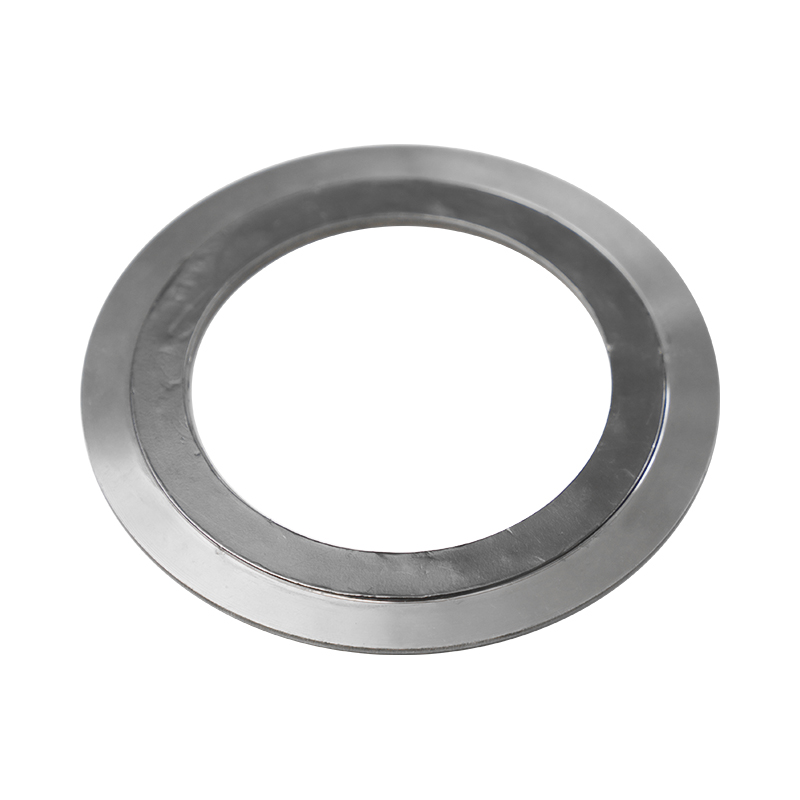
In the demanding environments of the chemical, petrochemical, and power industries, selecting the appropriate sealing component is critical for preventing hazardous leaks and ensuring operational longevity. The corrugated graphite gasket has emerged as a high-performance solution, combining the conformability of flexible graphite with the mechanical structural integrity of a corrugated metal core. However, the overall effectiveness of the seal is heavily dependent on the metallurgy of the core. Jiangsu Jintai Sealing Technology Co., Ltd., founded in 2004 and the force behind the high-end brand Nofstein, specializes in advanced corrugated graphite gasket manufacturing. Our engineering team focuses on optimizing the synergy between graphite layers and various metal substrates to meet rigorous industrial standards, including CCS classification society requirements. Understanding how to choose the right metal core for graphite gaskets is essential for maintaining a hermetic seal in aggressive media.
1. The Role of Metallurgy in Chemical Compatibility
The metal insert provides the "spring-back" effect or elastic recovery that flexible graphite lacks on its own. While graphite is chemically inert to most media, the metal core is susceptible to corrosion if the media penetrates the graphite layers. When comparing stainless steel vs Hastelloy for gasket cores, standard 316L stainless steel offers excellent resistance to general oxidation and mild acids, whereas Hastelloy C276 is required for high-concentration chlorides and oxidizing acids. For engineers, evaluating corrugated metal gasket recovery rates involves looking at the yield strength of the insert material; a core that loses its temper due to chemical attack will lead to immediate joint failure. Using a chemical resistant corrugated graphite gasket with a specialized alloy core ensures that the seal remains intact even in the presence of volatile organic compounds (VOCs).
Common Metal Insert Performance Matrix
- Corrosion Resistance: High-nickel alloys prevent stress-corrosion cracking (SCC).
- Temperature Stability: Advanced alloys maintain mechanical "corrugation" memory at elevated temperatures.
| Material Grade | 316L Stainless Steel | Hastelloy C276 / Inconel 625 |
| Chemical Resistance | Good (General Purpose) | Superior (Highly Aggressive Media) |
| Max Temperature | Approx. 550°C (In Air) | Approx. 800°C+ (Depends on Graphite Grade) |
| Primary Application | Steam and Oil & Gas | Chemical Processing / Acidic Environments |
2. High-Temperature Sealing and Oxidation Challenges
In high-temperature applications, the primary enemy of the corrugated graphite gasket is oxidation of both the graphite and the metal core. Improving high temperature corrugated graphite gasket life requires the use of inhibited grade graphite and a metal core that does not scale or embrittle. For instance, Monel 400 corrugated gasket benefits include excellent resistance to hydrofluoric acid and seawater, but it may not be suitable for high-sulfur environments. In contrast, Inconel 625 corrugated graphite gasket applications are ideal for extreme thermal cycling in power plants. Properly installing corrugated graphite gaskets in high-pressure flanges requires a core that can withstand high bolt loads without flattening, a metric where 300-series stainless steels are often the baseline but high-nickel alloys are the premium choice.
Technical Comparison of High-Performance Alloys
- SS316L: Economical, versatile, but limited in concentrated acids.
- Hastelloy: Exceptional resistance to pitting and crevice corrosion.
- Monel: Specialized for hydrofluoric acid and oxygen service.
| Insert Material | Steam Service | Acidic Service (e.g., HCl, H2SO4) |
| 316L SS | Excellent | Limited / Not Recommended |
| Inconel 625 | Superior | Excellent |
| Hastelloy C276 | Superior | Best-in-Class Resistance |
3. Engineering Best Practices: Sealing Stress and Recovery
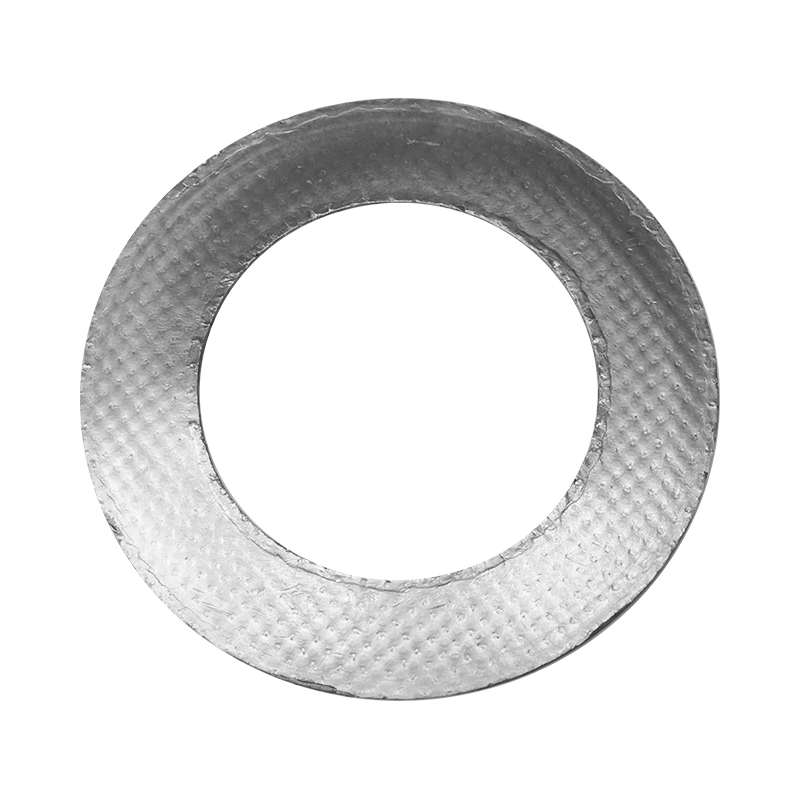
A corrugated graphite gasket functions by concentrating the seating stress on the "peaks" of the corrugations, allowing the graphite to flow into flange irregularities. The benefits of using corrugated graphite gaskets in heat exchangers include the ability to seal at lower bolt loads compared to spiral wound gaskets. However, the corrugated graphite gasket vs spiral wound gasket comparison often hinges on the "recovery" or spring-back. For joints with frequent thermal expansion and contraction, a metal core with high elastic modulus is required. At Jintai Sealing, our Nofstein high-end sealing products are tested for corrugated graphite gasket leakage rate standards to ensure they meet the modern "low-emission" requirements of the global shipping and steel industries.
Critical Engineering Sequence for Gasket Selection
- Identify Media: Determine the pH, concentration, and presence of oxidizers.
- Determine Thermal Profile: Assess maximum operating temperature and frequency of thermal cycles.
- Calculate Bolt Load: Ensure the metal insert thickness (typically 0.5mm) matches the flange pressure rating.
Conclusion: The Synergy of Material Science
Ultimately, the "best" metal insert for a corrugated graphite gasket is one that matches the specific chemical and thermal stressors of the application. While 316L is a reliable workhorse, aggressive chemical environments necessitate the transition to Hastelloy or Inconel cores. Jiangsu Jintai Sealing Technology Co., Ltd. continues to push the boundaries of sealing technology through our Nofstein brand, integrating scientific experimentation with decades of manufacturing expertise to provide the global market with reliable, safe, and efficient sealing solutions.
Frequently Asked Questions (FAQ)
1. How to choose the right metal core for graphite gaskets in a marine environment?
For marine applications, 316L stainless steel is often the minimum requirement due to salt-air corrosion, but Monel 400 is preferred for parts in direct contact with seawater to prevent pitting.
2. What are the Monel 400 corrugated gasket benefits compared to stainless steel?
Monel 400 offers superior resistance to hydrofluoric acid and a wide range of alkalis. It also provides excellent toughness across a broad temperature range, which is critical for specialized chemical refining.
3. Is a corrugated graphite gasket vs spiral wound gasket comparison always in favor of the corrugated type?
Not always. Corrugated gaskets are better for low-load applications and large-diameter heat exchangers, while spiral wound gaskets are generally better suited for very high-pressure piping where blow-out resistance is the primary concern.
4. Why is my corrugated graphite gasket leaking at high temperatures?
Leaking usually occurs due to graphite oxidation (if temperatures exceed 450°C in air) or the loss of core spring-back. Improving high temperature corrugated graphite gasket life often involves using oxidation-inhibited graphite and Inconel inserts.
5. Do your products meet corrugated graphite gasket leakage rate standards like TA-Luft?
Yes, our Nofstein high-end series is designed to meet stringent fugitive emission standards. Through precision corrugation and high-purity graphite lamination, we achieve ultra-low leakage rates suitable for modern environmental regulations.
Industry References
- ASME B16.21: Nonmetallic Flat Gaskets for Pipe Flanges.
- EN 13555: Flanges and Their Joints - Gasket Parameters and Test Procedures.
- NACE MR0175/ISO 15156: Materials for use in H2S-containing environments in oil and gas production.
- Jintai Sealing Internal Laboratory: "Comparative Analysis of Alloy Elastic Recovery in Corrugated Seals" (2025).

 Home
Home +86 152 4020 4398
 zdjt004@jsjtmf.vip
 No.2 Xingyuan East Road, Yuanzhu Town Industrial Park, Taixing City, Jiangsu Province, China
Copyright © 2024. Jiangsu Jintai Sealing Technology Co., Ltd. All rights reserved. Custom Sealing Gaskets, Sealing Packing, Rubber Products
