


 Eng
Eng 
 русский
 Home / News / Industry News / What are the Critical Torque Requirements and Installation Tips for a Corrugated Graphite Gasket to Ensure Zero Leakage?
 What are the Critical Torque Requirements and Installation Tips for a Corrugated Graphite Gasket to Ensure Zero Leakage?
 2026.01.22
 Industry News
Article Directory
In high-pressure and high-temperature industrial environments, achieving a hermetic seal is paramount for operational safety and environmental compliance. The corrugated graphite gasket has emerged as a premier choice for engineers due to its unique ability to combine the recovery properties of a metallic core with the superior sealing characteristics of flexible graphite. Jiangsu Jintai Sealing Technology Co., Ltd., through its high-end brand Nofstein, has spent over two decades perfecting these industrial sealing solutions to meet the rigorous demands of the shipping, power, and chemical sectors.
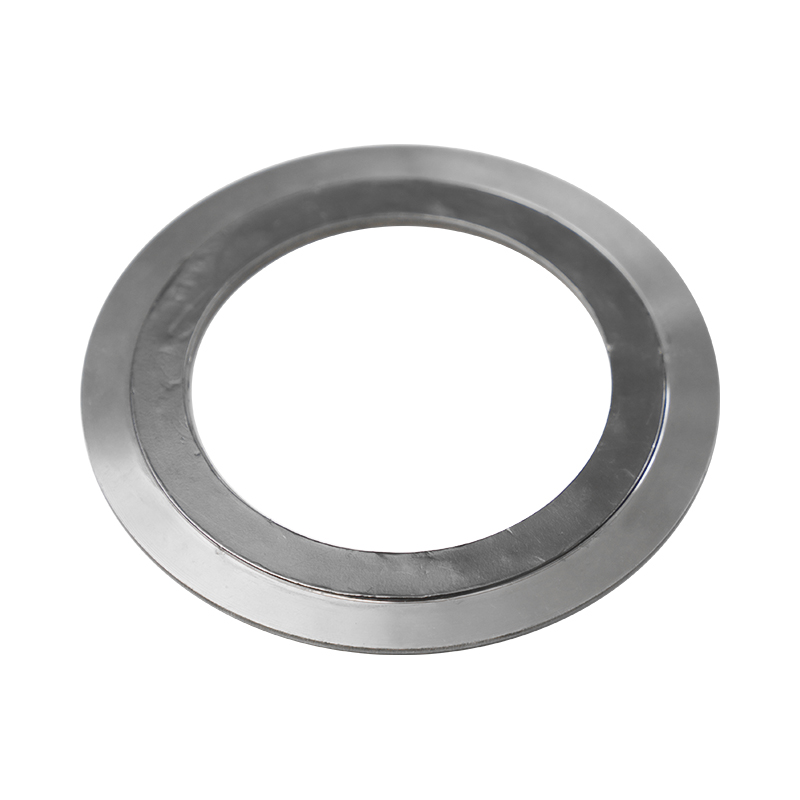
Understanding the Mechanics of Corrugated Graphite Sealing
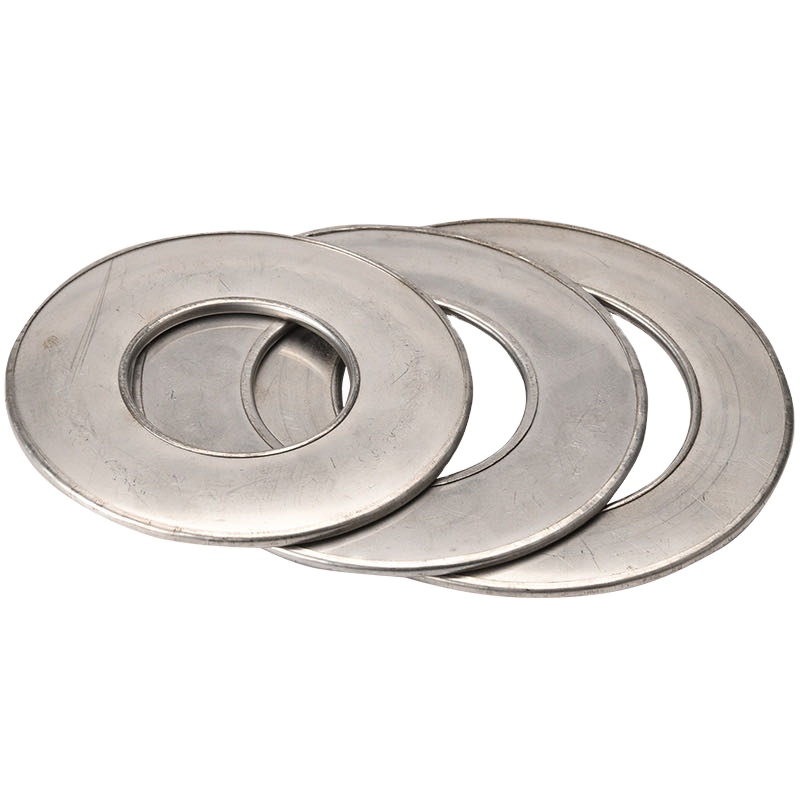
A corrugated graphite gasket operates on the principle of concentrated stress. The metallic "peaks" of the corrugations create high-seating stress zones that allow the graphite to flow into flange imperfections even at lower bolt loads. This is particularly critical when dealing with corrugated metal gasket with graphite facing designs, where the metal substrate provides structural memory while the graphite ensures micro-sealing.
Comparison: Corrugated vs. Spiral Wound Gaskets
While spiral wound gaskets are common, corrugated graphite designs often provide a more effective seal in flanges with limited bolt load or where space is at a premium. Corrugated gaskets generally require lower seating stress to achieve initial tightness compared to the high-density windings of spiral wound types.
| Feature | Corrugated Graphite Gasket | Spiral Wound Gasket |
| Required Seating Stress | Lower (Ideal for fragile flanges) | Higher (Requires robust bolting) |
| Recovery Properties | Excellent due to corrugated core | Good, but dependent on V-shape strip |
| Thickness Profile | Typically thinner (1.5mm - 3.0mm) | Typically thicker (3.2mm - 4.5mm) |
Critical Torque Requirements for Zero Leakage
The torque required to seal a corrugated graphite gasket is not a static number; it is a calculated value based on the gasket's surface area, the flange pressure rating, and the lubrication coefficient of the bolts. Engineers must target a specific "Gasket Seating Stress" to ensure the graphite is sufficiently compressed into the corrugations without crushing the metallic core.
According to 2024 industrial updates regarding fugitive emissions, the Pressure Vessel Research Council (PVRC) emphasizes that over 80% of gasket failures are attributed to improper torque application rather than material defect. Modern high temperature corrugated graphite seal applications now utilize the "Tightness Class" methodology to determine precise bolt loads.
Factors Influencing Torque Accuracy
- Bolt Lubrication: Use of a high-quality anti-seize lubricant can change the K-factor (friction coefficient) from 0.20 to 0.12, drastically altering actual load.
- Flange Surface Finish: A surface finish of 125-250 RMS is generally recommended for flexible graphite corrugated gaskets to ensure mechanical "grip."
Professional Installation Tips for Industrial Sealing
To ensure a long-lasting seal, Jiangsu Jintai Sealing Technology Co., Ltd. recommends following the "Star Pattern" tightening sequence. This ensures uniform compression across the gasket surface, preventing "point-loading" which can lead to core deformation. When sourcing wholesale corrugated graphite gaskets for chemistry plants, it is essential to provide installers with calibrated torque wrenches and clear bolt-load specifications.
Installation Comparison: Dry vs. Lubricated Bolts
Installing bolts "dry" results in significant torque loss due to friction, whereas lubricated bolts ensure that the torque applied is efficiently converted into clamping force. This distinction is vital for custom corrugated graphite gasket manufacturing where specific bolt grades are required.
| Parameter | Dry Bolt Installation | Lubricated Bolt Installation |
| Torque Conversion Efficiency | Low (Approx. 50% lost to friction) | High (Approx. 90% converted to load) |
| Risk of Galling | High, especially with Stainless Steel | Very Low |
| Load Uniformity | Inconsistent across the flange | Highly consistent |
Recent technical breakthroughs in 2025 focus on "smart bolting" systems that provide real-time feedback on gasket stress during the installation of industrial sealing solutions in critical power grid infrastructure.
Why Choose Nofstein by Jintai Sealing?
As an enterprise that has achieved CCS classification society identification and passed environmental CiT tests, Jiangsu Jintai Sealing Technology Co., Ltd. is more than just a manufacturer. Our 2012 Sealing Technology Industrial Park project has allowed us to integrate advanced materials with meticulous quality control manuals. Whether you are seeking a high temperature corrugated graphite seal for a nuclear plant or industrial sealing solutions for marine machinery, our expertise in collaborating with global brands ensures that our Nofstein products stand at the pinnacle of performance.
Frequently Asked Questions (FAQ)
- Can a corrugated graphite gasket be reused?
No. To ensure zero leakage, gaskets should never be reused as the corrugations and graphite layers undergo permanent deformation during the initial seating. - What is the maximum temperature for a high temperature corrugated graphite seal?
In non-oxidizing atmospheres, flexible graphite can withstand up to 3000°C, but in typical industrial air environments, it is rated up to 450°C to 500°C. - How do corrugations improve the seal?
The corrugations act like springs, providing "live loading" that helps maintain the seal during thermal cycling and pressure surges. - What bolt grade is best for these gaskets?
ASTM A193 Grade B7 bolts are the most common for high-pressure industrial flanges, though B8M (Stainless) is used for corrosive environments. - Does Nofstein offer custom corrugated graphite gasket manufacturing?
Yes, we design and manufacture various sizes and core materials, including 304SS, 316L, and Monel cores, to suit specific chemical and pressure requirements.

 Home
Home +86 152 4020 4398
 zdjt004@jsjtmf.vip
 No.2 Xingyuan East Road, Yuanzhu Town Industrial Park, Taixing City, Jiangsu Province, China
Copyright © 2024. Jiangsu Jintai Sealing Technology Co., Ltd. All rights reserved. Custom Sealing Gaskets, Sealing Packing, Rubber Products
