


 Eng
Eng 
 русский
 Home / News / Industry News / Gland Packing Quality Control Standards Explained: What Buyers Must Check
 Gland Packing Quality Control Standards Explained: What Buyers Must Check
 2026.08.26
 Industry News
Article Directory
- 1 What a Gland Packing QC Program Actually Measures
- 2 Material Verification: What Is Actually Inside the Braid
- 3 The Standards Used to Qualify Gland Packing
- 4 Performance Tests That Predict Service Behavior
- 5 QC Questions to Ask Before You Approve a Supplier
- 6 Quality Control Only Works When Installation Respects the Design
A maintenance team installs a new spool of braided gland packing, torques the gland to the recommended value, and still sees leakage around the stem within hours. The packing looks normal: same dark braid, same square cross-section, same label. What differs is the internal quality: braid density, yarn tension, impregnation distribution, and dimensional accuracy. These are not cosmetic details. They determine contact pressure, friction, and the packing's ability to hold a seal through thermal cycles.
The conclusion is straightforward: quality control makes invisible properties visible and measurable. Standards such as API 622 and ISO 15848, together with the manufacturer's own batch inspection, define what to measure, how to measure it, and which deviations are acceptable. This article explains those standards in practical terms, what a credible QC report should contain, and the questions to ask before approving a supplier.
What a Gland Packing QC Program Actually Measures
A meaningful gland packing QC program covers three layers: incoming materials, the braiding process, and the finished product. Finished-product checks are the layer most buyers see, and they fall into three groups.
Cross-Section Dimensions, Tolerance, and Squareness
Braided packing is sold by nominal cross-section, with common sizes such as 8 x 8, 10 x 10, and 12 x 12 mm. A typical manufacturing tolerance is +/- 0.5 mm on width and thickness, with tighter limits around +/- 0.3 mm for pre-compressed or valve-specific styles. QC should measure dimensions at several points along the reel, because a reel that drifts wider at the end will either sit loose in the stuffing box or refuse to compress evenly under the gland.
Squareness matters as well. A uniform, well-filled braid keeps clean corners. Rounded corners or a flattened profile usually indicate loose braid tension or a yarn count below specification.
Density and Mass per Meter
Density is the most informative single number in gland packing QC. It is measured by weighing a known length and dividing by its volume, or by the Archimedes displacement method for irregular surfaces. Indicative finished ranges are roughly 1.0 to 1.4 g/cm3 for graphite-based packing and 1.2 to 1.6 g/cm3 for PTFE-based types.
Mass per meter is a practical shop-floor equivalent: two reels with the same label but different weights contain different amounts of sealing material. A supplier should publish a target range for each product, and the QC report should show the measured value rather than a simple "pass".
Braid Structure and Surface Condition
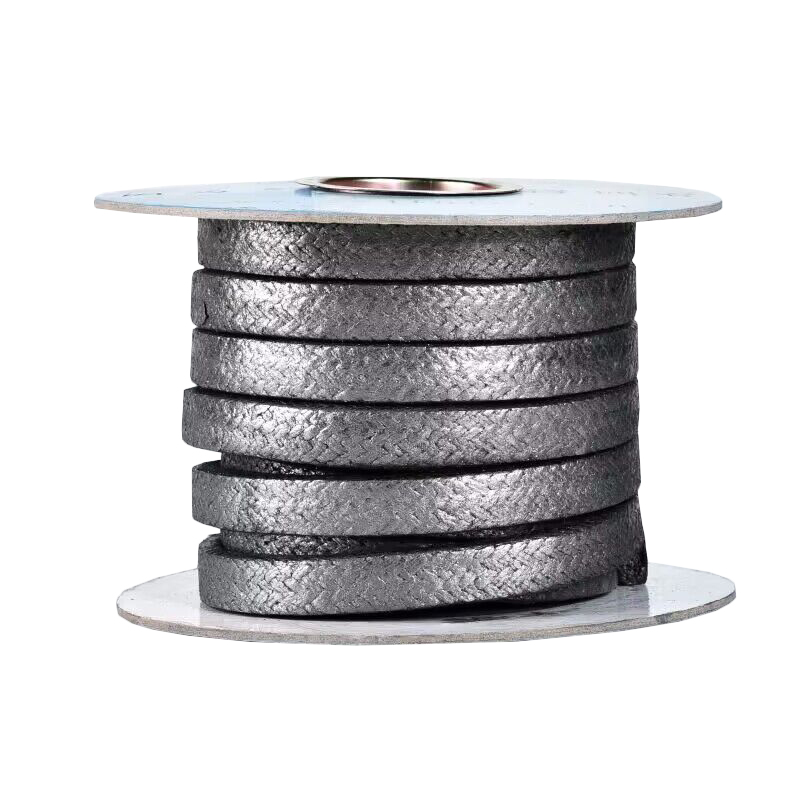
Uniform braid angle, consistent strand width, and full coverage without loose filaments are visual indicators that braider tension was controlled. For graphite packing, surface dusting or flaking suggests low binder quality or insufficient densification. For aramid and carbon fiber packing, broken filaments are a common sign of aggressive processing.
Material Verification: What Is Actually Inside the Braid
Dimensions and density do not identify material. Two reels with identical density can have very different chemical resistance and temperature limits, so composition must also be verified.
Carbon and Ash Content for Graphite Packing
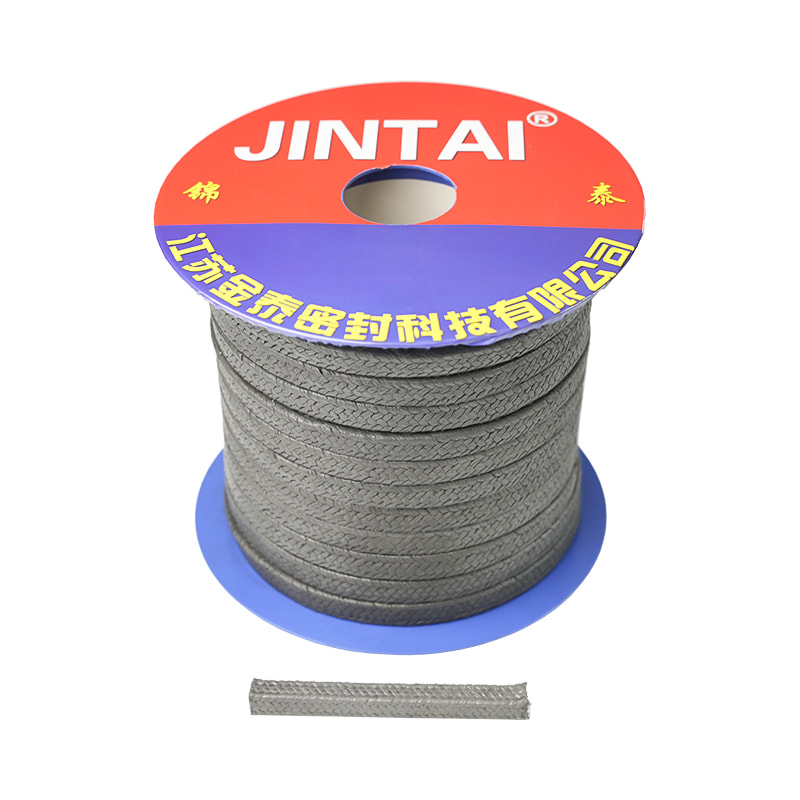
For graphite packing, carbon content and ash content are the standard compositional checks. High-purity pure graphite packing is expected to reach roughly 98% to 99.9% carbon with low ash, which directly affects oxidation resistance at high temperature and suitability for clean steam service. This is why our pure graphite gland packing is released with documented carbon and ash values rather than a generic material claim.
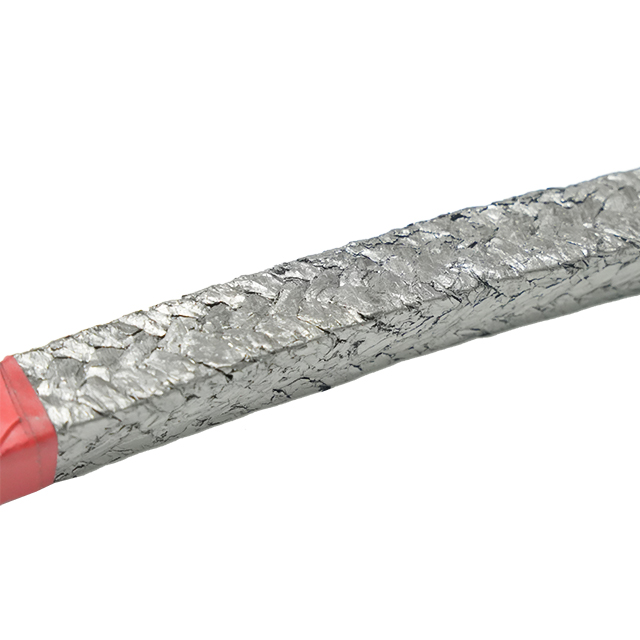 Pure Graphite Braided Gland Packing for Valves and Pumps SealingPure graphite braided gland packing designed for valves and pumps, providing reliable sealing under high temperature, pressure, and chemi...View Product →
PTFE Purity and Impregnation Levels
In graphite PTFE packing, PTFE reduces friction and improves chemical inertness, so QC checks the dispersion content and its distribution through the braid. PTFE-only packing should be checked for purity because impurities create hard spots that score shafts. For chemically aggressive media, the graphite PTFE packing range is verified against published composition and density data before it leaves the plant.
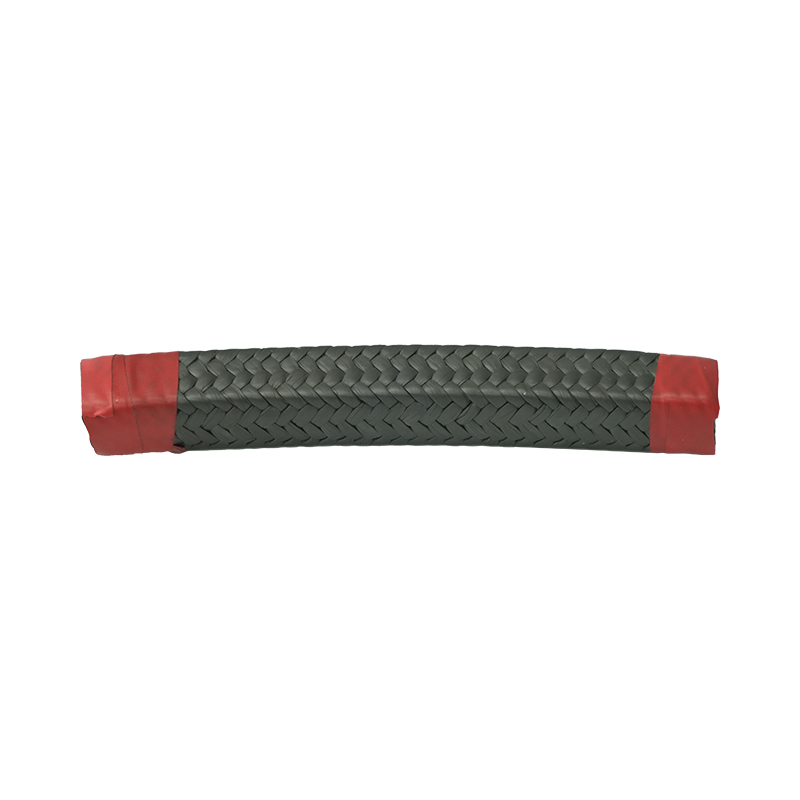 Graphite PTFE Gland Packing Material for Industrial Sealing SolutionsGraphite PTFE Gland Packing provides chemical-resistant, high-temperature sealing for pumps, valves, and rotary or reciprocating industri...View Product →
Yarn Strength for Aramid, Carbon, and Ramie Types
Aramid, carbon fiber, and ramie packing depend on the tensile strength of the reinforcing yarn. Incoming yarn should be tested for tensile strength and elongation; finished packing can be checked by unbraiding a short length and testing individual strands. This is also where batch traceability starts, so a failure investigation can trace a reel back to its original yarn lot.
The Standards Used to Qualify Gland Packing
Several standards are routinely cited in gland packing procurement. They are not interchangeable: some are type tests for valve packing designs, some define leakage classes, and some describe the quality management system. The table below summarizes the ones that appear most often in technical datasheets and purchase specifications.
| Standard | What it evaluates | Typical use in QC |
|---|---|---|
| API 622 | Type testing of valve packing under thermal cycling and helium leak measurement | Qualifies a packing design for low-emission rising-stem valves |
| ISO 15848-1 | Endurance testing and leakage classification for valve packings | Defines measurable leakage classes for acceptance |
| API 624 | Performance of graphite packing in rising-stem valves | Tightens requirements for graphite packing in fugitive-emission service |
| ISO 9001 | Quality management system at the manufacturing site | Confirms documented process control and traceability |
Two clarifications matter. First, type testing is performed once for a product design, not for every reel; a certificate dated several years ago does not prove that the current batch is identical. Second, a standard name on a datasheet is not the same as a test report. Ask for the actual values: leakage class, test pressure, medium, and the test rig configuration. For graphite packing specifically, density interacts with leakage behavior in ways that are not obvious from the label; our graphite gland packing density and API 622 leakage overview explains how the two are linked in practice.
Performance Tests That Predict Service Behavior
Stuffing Box Simulation and Leakage Measurement
The most valuable QC is behavioral rather than dimensional. In a stuffing box test, the packing is installed in a gland fixture, compressed to a defined gland stress, pressurized with nitrogen or helium, and cycled through stem movement and temperature changes. The measured leak rate is then compared with the target class. This test captures the combined effect of density, braid construction, and impregnation in one result.
Compression Recovery and Thermal Relaxation
A packing that does not recover after compression will lose gland stress quickly, and a packing that relaxes during heating will need repeated re-torquing. QC tests for recovery and relaxation help predict how often a valve needs adjustment. For hot services, this is often the difference between a packing that seals for a full operating cycle and one that fails mid-run. Our high-temperature gland packing is evaluated with thermal behavior in mind, because the QC method should reflect the actual service condition.
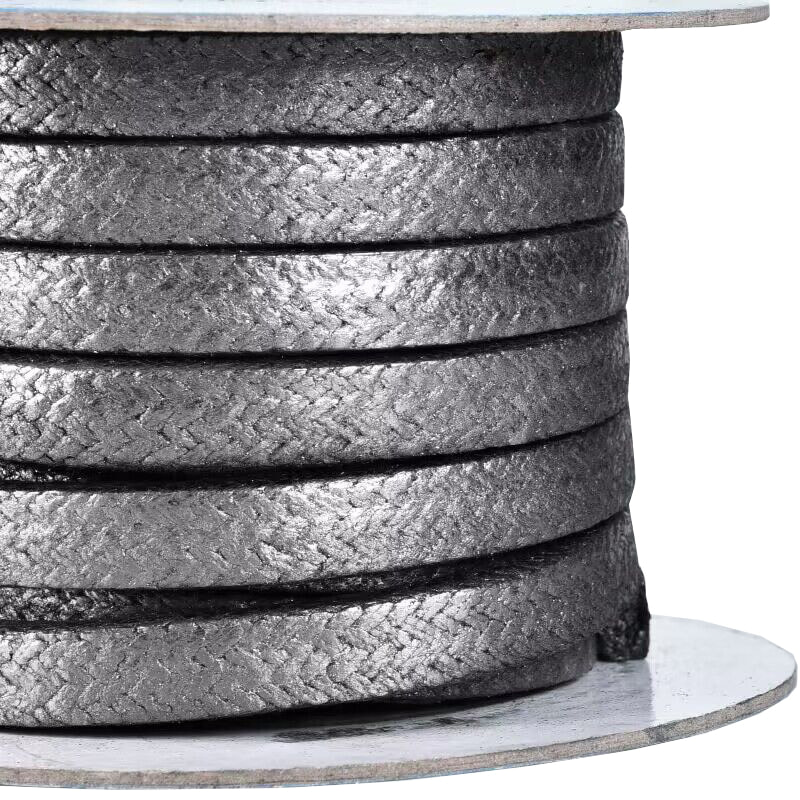 Wholesale Ultra-high Temperature Graphite Gland Packing ManufacturersJiangsu Jintai Sealing Technology Co., Ltd. Is China Wholesale ODM/OEM Ultra-high Temperature Graphite Gland Packing Manufacturers, Facto...View Product →
Friction and Shaft Wear
For pumps and rotating equipment, friction and resulting shaft wear are part of quality. Lower friction means less gland heat and longer packing life, but it can also indicate a less dense braid that leaks. QC data lets the engineer balance these requirements instead of judging by feel alone.
QC Questions to Ask Before You Approve a Supplier
A certificate marked "pass" is not quality control. A complete QC document set is specific. Use this checklist when reviewing a supplier's quality package:
- Measured cross-section width, thickness, and tolerance for the delivered batch, not nominal values copied from the datasheet.
- Density in g/cm3 and mass per meter, with the test method stated.
- Carbon content and ash content for graphite packing, or purity and yarn strength for PTFE, aramid, and carbon fiber types.
- Leakage class and test pressure from stuffing box testing if the packing is rated to API 622 or ISO 15848.
- Batch number, production date, and line or operator identification.
- Sampling plan: how many reels were inspected and how many measurements were taken per reel.
- Storage conditions and recommended shelf life.
If these numbers are not available, treat the quotation as an indication of price, not as a basis for a purchase decision. On the buyer's side, a simple incoming inspection, measuring the cross-section, weighing one meter, and checking the surface, takes minutes and catches most serious deviations. For more detail, our carbon gland packing sizing and certification guide describes the sizing data and certificates worth requesting in a B2B purchase.
Quality Control Only Works When Installation Respects the Design
Even a fully verified packing will leak if the stuffing box is worn, the shaft finish is poor, or the gland is compressed unevenly. QC data is useful in troubleshooting: if the packing density matches the certificate but the joint still leaks, the problem is likely in the box geometry or installation procedure. Precise cut length, a clean diagonal joint, and staged gland tightening belong to the same quality chain.
For buyers, the practical takeaway is simple. Gland packing is manufactured, not mined; its quality can be controlled, measured, and documented. Set your own acceptance criteria, ask for data instead of adjectives, and verify a sample on arrival. When you work with an established gland packing manufacturer that releases batch-specific QC data with every reel, packing selection becomes a managed decision rather than a gamble.

 Home
Home +86 152 4020 4398
 zdjt004@jsjtmf.vip
 No.2 Xingyuan East Road, Yuanzhu Town Industrial Park, Taixing City, Jiangsu Province, China
Copyright © 2024. Jiangsu Jintai Sealing Technology Co., Ltd. All rights reserved. Custom Sealing Gaskets, Sealing Packing, Rubber Products
